Monday, June 07, 2010


Is it all Over?


The headlines in various papers say the same thing, on Tuesday the order for the demolition of the South Side of Colborne Street will be given and the 41 buildings that have been at the centre of a great deal of controversy will soon be no more.

Reading the notes from the Facebook Group Save the South Side of Colborne Street, it is all over. Lloyd Alter of the Architectural Conservancy of Ontario wrote:
We lost, and two councillors previously in support of preserving the buildings switched their votes to demolition. But I want to say how proud I am to have met you all , to have fought this fight with such people. Your deputations were persuasive and I cried during Leis's impassioned pleas. Too bad nobody was listening.


The vote went 8-3, it seems a couple of counsellors voted for the demolition because further delay was hurting the downtown core, the businesses that were there had problems because of the delay.

So today, with the aid of my trusty camera, I went for a walk and took some photographs:


Some of these building date back to the middle of the 19th century. One wonders if people who were there at the beginning when the decay started to set in had contacted groups to support restoration if the downtown of Brantford could have been saved. I know there are many who suggest that it was not likely, with the growth of the car culture, people looked to the outskirts, with the malls and more recently the big box stores as the place to shop. Downtowns were viewed as passé, only fit for the druggies and others who belong to the lower end of the Social Economic Scale.


Now the news is stating that the Y will be coming to occupy some of the land that will soon be vacant.


I always thought the rallying cry should have been "Save Heinbuck's"

Perhaps I'll take some photos and videos of the demolition.

Thursday, June 03, 2010

Bill C-32, Epic Fail


Yesterday, the government of Canada tabled Bill C-32, also called the Copyright Modernization Act. The government has referred to this bill as an attempt to modernize Canada's copyright rules. They feel the rules need to be changed since we are now living in the digital age.

This bill does two things, if we are to believe what is being reported, it protects the rights of consumers to produce and own a back up copy of all digital entertainment they own. In other words, you can rip music and movies from the disc to your hard drive. You can also take this copy and set it to your favourite mp3 player, if this is what you want to do. So, fair use is now enshrined by the law of the land.

The bill states:
29.22 (1) It is not an infringement of copyright for an individual to reproduce a work or other subject-matter or any substantial part of a work or other subject-matter if


(a) the copy of the work or other subject-matter from which the reproduction is made is not an infringing copy;


(b) the individual legally obtained the copy of the work or other subject-matter from which the reproduction is made, other than by borrowing it or renting it, and owns or is authorized to use the medium or device on which it is reproduced;


(c) the individual, in order to make the reproduction, did not circumvent, as defined in section 41, a technological protection measure, as defined in that section, or cause one to be circumvented;


(d) the individual does not give the reproduction away; and


(e) the reproduction is used only for private purposes.


You want to put it on your computer, make a copy, put it on your hard drive and enjoy listening to it as you work. This is wonderful and is a great idea. Fair use should be enshrined in law to protect people from the messy and ridiculous law suits from Big Media.

But remember, this act is from the government and is probably a gift to Big Media. For in the same act, there is this:
41.1 (1) No person shall


(a) circumvent a technological protection measure within the meaning of paragraph (a) of the definition “technological protection measure” in section 41;


(b) offer services to the public or provide services if


(i) the services are offered or provided primarily for the purposes of circumventing a technological protection measure,


(ii) the uses or purposes of those services are not commercially significant other than when they are offered or provided for the purposes of circumventing a technological protection measure, or


(iii) the person markets those services as being for the purposes of circumventing a technological protection measure or acts in concert with another person in order to market those services as being for those purposes; or


(c) manufacture, import, distribute, offer for sale or rental or provide — including by selling or renting — any technology, device or component if


(i) the technology, device or component is designed or produced primarily for the purposes of circumventing a technological protection measure,


(ii) the uses or purposes of the technology, device or component are not commercially significant other than when it is used for the purposes of circumventing a technolog- ical protection measure, or


(iii) the person markets the technology, device or component as being for the purposes of circumventing a technological protection measure or acts in concert with another person in order to market the technology, device or component as being for those purposes.


In other words, if the copyright holder has slapped on some sort of protection, you can't circumvent it. So your rights to make a copy can be stymied by this part of the bill. It's like the government making a law in which the speed limit is 120kph and then allowing the automobile manufacturer to put a governor on all cars so they can't go faster then 60kph and making it illegal to take the governor off. In other words, your rights are now short changed by the digital protection that a copyright holder decides to put on the disc.

What a great idea, give people rights, and a lot of actions are protected, but then turn around and allow companies to slap on the encryption tools and threatening legal actions if you crack it.

Also, ISP's:
41.25 (1) An owner of the copyright in a work or other subject-matter may send a notice of claimed infringement to a person who provides


(a) the means, in the course of providing services related to the operation of the Internet or another digital network, of telecommunication through which the electronic location that is the subject of the claim of infringement is connected to the Internet or another digital network;


(b) for the purpose set out in subsection 31.1(5), the digital memory that is used for the electronic location to which the claim of infringement relates; or


(c) an information location tool as defined in subsection 41.27(5).


Other interesting parts are the fact that copyright can be extended for 50 years:
23. (1) Subject to this Act, copyright in a performer’s performance subsists until the end of 50 years after the end of the calendar year in which the performance occurs. However,


(a) if the performance is fixed in a sound recording before the copyright expires, the copyright continues until the end of 50 years after the end of the calendar year in which the first fixation of the performance in a sound recording occurs; and


(b) if a sound recording in which the performance is fixed is published before the copyright expires, the copyright continues until the earlier of the end of 50 years after the end of the calendar year in which the first publication of the sound recording occurs and the end of 99 years after the end of the calendar year in which the performance occurs.


Why do I call this a fail?

It seems the bill thinks the only way a person gets their media is to buy, or rent or take it out of the library and then rip it for themselves. They take it and sell it to others. Listen, this is not how it happens. Most people get their media over the Internet. They go to their favourite torrent client and look for the music or movie. When you find it, click it and wait a few minutes or a couple of hours. Go back to your computer and you will find the music or movies or television shows. It's on your computer and you can watch on your high def monitor or burn it to a cd or dvd to watch over your home theatre system.

Does it stop piracy? Not at all. It ensures that more people will get involved then before. Stop me from making a back up, you shall pay.

No doubt more to follow.

Wednesday, June 02, 2010


Quit Facebook Day. Who Won? Who Lost?


So the day to quit Facebook has come and gone. From reports, some 31,000 people stated they have had enough with, as PCWorld described it, the cavalier attitude Facebook has taken with privacy. In fact, PCWorld lauds those who took up the challenge and deleted their account. I know they didn't do it right away, it takes a week for that to happen. Still, 30-31,000 people said they had enough of it all and have left. I posted the video of Leo Laporte quitting, since as one of the early adopters and as the head TWIT, he has a very strong following amongst the Tech Community. Before I go too far on that tack, I should remind you he at one time quit Twitter, but now is back. Although I believe it had more to do with the name rather then any problems he may have had with the service.

The "Quit Facebook" did garner a fair bit of publicity and interest. Most did wonder what the big deal was all about, and in some regards those who wondered have a point. For those who were going on about privacy a question had to be, but Facebook is all about sharing, not keeping. It's about posting, not privacy. Of course, the real issue is not about sharing, but rather what permission do we give Facebook with our information.

There were some who questioned and cautioned the stand of leaving Facebook. Amber MacArthur, who co-hosts a show with Leo Laporte, expressed her view and stated she has no interest in leaveing Facebook. Her article in the Globe and Mail gave the 5 Top Reasons not to Leave.

This leads me to the title of the Blog, who won, who lost. My suggestions.

The Winners, the Quit Facebook group. Considering how small their numbers were in comparison to the number of people on Facebook, they got the attention of the Big Company. You would think 31,000 out of 450000000 is a very small tempest in a teapot, but still they got Facebook to notice them. As well, they got Facebook to do some dumb things, such as remove all posts that contained links to their group, or anything that would help a person leave Facebook. They got the attention of the Mainstream Media which helped their cause immensely. They got the message of the issue of privacy before people.

The Winners, Facebook. They weathered the storm. The number that left is very small. One article stated almost a million Canadians joined Facebook in the month of May alone. While it did serve as a wake-up call for Facebook not to be so quick and easy with privacy, they must feel good that ultimately, the call to quit was ignored by the vast majority. People didn't seem to want to quit after all.

The Losers: the "Quit Facebook" group. At one time it was reported that approximately 60% of Facebook users planned to quit. If you look at the graph, only 46% were either highly likely or already had quit. If you just consider those numbers, it would mean 207,000,000 were going to pull the plug on their account or had done so. 31,000 is a far cry from that number. So it could be said the quit group suffered from slacktivism. It's a common problem that exists in the day of social networking, people get angry over an issue, they sign up, sign off and promise to get involved. However when the time comes, a very small minority actually get involved. The rest see their involvement begin and end by joining the group.

The Losers: Facebook. There is now a vocal minority that are not impressed with anything Facebook does or will do. They lost some trust and while it meant to almost nothing now, it could easily grow. Chris Crum made this question in his article:
Could Facebook become MySpace? Sure, it could, but it doesn't look like it's going to happen anytime soon. It's going to take more than privacy concerns. It's going to take another service simply being "cooler". For now, Facebook is still "where it's at," and it will continue to be important for the foreseeable future.

Excellent question, could Facebook be the next MySpace? Remember when it was the totally cool place to be? Now, where is it? It still exists but what. Now there are groups interested in toppling Facebook. They want to have an open source social network, where ease and privacy are both the strong points. Right now, its a dream, but what if it comes true.

I think a question has to be asked, how many of those hundreds of millions are active now? How many were influenced to stop using Facebook. Perhaps they won't go through the trouble of deleting and cancelling their account, but they will simply never bother going back to the site. Their account is a dead account and is just nothing more then deadwood.

It's going to be an interesting few years. The real hope is Facebook was sufficiently humbled that it will be more aware of concerns from its stakeholders and not be so quick to abuse us.

Sunday, May 30, 2010


Of Gardens and Gnomes


After all the concern about privacy and Facebook, which are two topics that will appear in future blogs. I thought I'd change a few things and lighten up for this weekend. The last weekend of May deserves something light, after all the summer is only a couple of weeks away and that's the time we all can start to relax, at least that is the hope.

So Gardens. Yes, the time of planting has arrived and I have over the past month and a bit taken the spade to the ground and done some turning of soil and adding fresh compost and topsoil to the work. I've also expanded the little garden to include a third bed a little further down the back.

As of now, most things are planted. I still have to add a few zucchini plants, for the upcoming chocolate zucchini cake which will be made, although I do have some hybrid One Ball Zucchinis starting to show. We're not sure if they can be used.

I'll give you a report of how its growing from time to time.

Wednesday, May 26, 2010


A Blink or a Wink?


I entitled my last blog "And Facebook Blinked", they heard all the complaints and the fact a number of early adopters were now opting out, and some quite high profile individuals as well. So today there was a press conference and the co-founder Mark Zuckerberg announced sweeping changes to the privacy setting for the site. He announced the changes in his blog.

He announced what the default of Facebook will be:
While many users have called for Facebook to change its default privacy settings to an entirely opted-out model, Zuckerberg explained that the company has chosen not to do so. "When people are able to share more, that leads to a world that's more open and connected," said the Facebook co-founder. "People want to share information, and they're best able to do that when they have control over what they share."

However, as Zuckerberg noted, the company has strong opinions about how sharing on the Web should be done. So the default settings will allow status updates, photos, and posts to be shared with everyone and photos you're tagged in, your religious and political view, and your birthday to be seen by friends of friends, while personal contact information will be kept private unless you alter that setting.


You know in a way I have no problem with their philosophy of openness and sharing beyond just family and friends. The difficulty is that did everyone understand that when they signed on, or did they simply expect everything they possted to be shared only with those who were on their friends list. To quote Stother Martin, "what we got here is a failure to communicate".

Perhaps the most important is the first change:
First, we've built one simple control to set who can see the content you post. In a couple of clicks, you can set the content you've posted to be open to everyone, friends of your friends or just your friends.

This control will also apply to settings in new products we launch going forward. So if you decide to share your content with friends only, then we will set future settings to friends only as well. This means you won't have to worry about new settings in the future.

This single control makes it easier to set who can see all your content at once, but you can still use all of the same granular controls we've offered if you'd like.


I should point out to you the article: "A Bill of Rights for Facebook Users". Here is what we should expect of Facebook when it comes to our material.

Overall, it seems people are generally pleased with the steps taken by Facebook.

I think no one would have challenges with Facebook's desire to make money and to consider our information as the source of monetization. After all, what company doesn't? After all, all those surveys we do, every magazine and newspaper we subscribe to sells their mailing list to companies that produce goods and services which would appeal to the demographics of the subscriber. You will often see such notifications on your notices of subscription. However there needs to be a strong opt-out ability and it should be simple and found without much of a search of the website. We need it easy because we don't have time to go through a long and complicated document to explain what we need to do.

Another good point from all this, it seems Mark listened. I suppose one a lot of this could be dismissed as the results of a very young person not fully understanding all he is doing. If this is so, then he needs a mentor, to help him with his myopic view of privacy and the changing of the terms of service.

If anything, hopefully he will realize that he must tread carefully when it comes to our privacy.

By the way, for the record I plan to stay with Facebook. So look me up.

Monday, May 24, 2010


And Facebook Blinked


It's all over the news today, Mark Zuckerberg, the now complete defensive Founder of Facebook wrote an article in the Washington Post today. His article expressed his desire to keep the user experience a wonderful thing on facebook.
Six years ago, we built Facebook around a few simple ideas. People want to share and stay connected with their friends and the people around them. If we give people control over what they share, they will want to share more. If people share more, the world will become more open and connected. And a world that's more open and connected is a better world. These are still our core principles today


To him, its all about people connecting and sharing their lives with their friends and reconnecting with family and friends. In all, laudable.

The complaints, the fact that the service lost some very high profile individuals has struck a nerve, plus the online unrest that was both mounted and I suspect growing, caused Mark to look again at his creation.

He has decided one of the issues was privacy and that there is a need to simply the privacy settings on Facebook:
We have heard the feedback. There needs to be a simpler way to control your information. In the coming weeks, we will add privacy controls that are much simpler to use. We will also give you an easy way to turn off all third-party services. We are working hard to make these changes available as soon as possible. We hope you'll be pleased with the result of our work and, as always, we'll be eager to get your feedback.


Of course the mea culpea has been met with some skepticism. Rob Pegoraro has some serious questions about the sincerity of the apology and whether or not this is truly a change of heart for the company.

If I can go back to the Zuckerberg article, he declares or articulates the guiding principles of Facebook:
Here are the principles under which Facebook operates:

-- You have control over how your information is shared.

-- We do not share your personal information with people or services you don't want.

-- We do not give advertisers access to your personal information.

-- We do not and never will sell any of your information to anyone.

-- We will always keep Facebook a free service for everyone.


So is this all a good thing, or will it just be some window dressing and the company will continue to act as it will to make itself profitable.

I think the bellwether will be the privacy settings, if they are simple to understand, find and change then it will be a positive sign. If there is more smoke and mirrors then the apology will have meant nothing.

Some people complain how Facebook changes everything. I suppose the company has the right to do what it does, after all, no company talks to me when they want to make a change, why should Facebook be different. I think the reason is clear, Facebook is different, we are not simply the consumer, we are the creators. Facebook exists and is able to thrive because we who use it provide the material that makes it a success. Every photograph, video, update makes us not simply the consumer but the stakeholder of the company. It exists because we use it. If anything this uprise makes it clear and it should inform the company that it can't mess with the stakeholders.

There's a few things as well, Facebook should not see the material uploaded as "their's", it isn't. Forget the legal mumbo-jumbo, its not Facebook, it belongs to the person who uploaded. Again, don't mess with the stakeholders. Should a person leave, everything gets wiped out. The material uploaded, photographs, videos and messages should all disappear.

Just a couple of more things:
The Register is reporting some more video smutware coming along. If you see the words 'distracting' 'beach' 'babes', don't click.

Take control of your privacy settings on Facebook. You have that right.

Thursday, May 20, 2010


Quit Facebook(?) Day


The news is out, May31st is the day people are supposed to delete their Facebook accounts. This is being done because the people who operate Facebook are not to be trusted with our confidence. Our privacy has been compromised again and again. If its not our photographs and uploaded media content being used for advertisements, it's the bugs that allow us to read the chats of those on our friends list. Then there is the rather unclear instructions on how to change our privacy defaults, or the very fact that Facebook has decided to make 'public', not 'private'. As well, there was that incident early on when the company did wholesales changes and turned the defaults back to public.

Couple this with the fact the founder, Mark Zuckerberg has had a few incidents of ethical faux pas, you can understand why people are beginning to lose faith with the company. In fact Mr. Zuckerberg is involved in an investigation into securities fraud, always a good thing to be involved in.

There is one page that gives 10 reasons to leave Facebook. As you read, there is a sense that the problem with Facebook is that the founder commenced it while still in University and he neglect to attend any of those Ethics classes he should have attended. If you read the book "The Accidental Billionaires", you get an understand of some of the issues which are truly haunting the people behind Facebook. Yes he did screw people over and he has paid for it and I suggest he will pay for it in the near future. I hope that this will be part of a lesson he does need to learn. It is without reason one word used in the subtitle is 'betrayal'. If you haven't read the book, go look for it at your local library and read it.

One of the issues facing any one attempting to organize the leaving is that it seems the statistics are against you, one newspaper pegs the number of visits at over 1/2 a billion. That a huge mass of people. I believe what should be rememebered and someone should remind Mark of this fact; Facebook is popular right now, but if something better should come along- just consider My Space. It was once thought unbeatable, but it has lost a lot of people and publicity.

I want to say, I'm not going to join the boycott. I have a few reasons, first of all, it is a good way and place to keep up to date with family and friends. It's also a good way to share media with family and friends. As both groups get spread out over this fair Dominion, it's the way to keep in track with everybody. As for privacy, I think Leo Laporte, who by the way, has left Facebook, said it best, consider everything you post on facebook and public and only post that material that is public. Don't post material that is either embarassing or could be used in a court of law. If it is illegal, it could end up in a court of law. Understand it for what it is, a means of keeping in touch. If you are worried about privacy, learn all you can about Facebook's privacy setting and put everything to the place you feel comfortable with, and stick with them.

Now a few things Facebook could do; the first is, damage control and serious damage control. Right now people are losing trust and the company must prove that it is now going to take privacy serious. Second, appoint a CEO, that is a Chief Ethics Officer who will go through all the new strategies and warn the company of the dangers if they screw with people again.

In the Privacy settings, put a 'Save Changes' button at the bottom of the page, so that when people are done changing the settings, they click it have the assurance its being done. If its not there, people might get rather suspicious. Right now, Facebook can't afford to alienate or get people suspicious.

Don't be so cavalier with the attitude towards privacy, people still care about privacy. Even though Mark Zuckerberg may think privacy is dead and buried, a lot of people disagree. Then there are those IM exchanges when Zuckerberg gives his opinion of people who trust him. Listen, Facebook can disappear overnight. To ensure that doesn't happen, it needs to be aboveboard in its deal with its clientèle and give them respect.

As for the Quit Facebook Day, I doubt there will be many, even if there is a couple of hundred thousand, it will pale with the numbers of people still using it. However, remove the smug look, see this as a wake up call, a wake up to do better.

Sunday, May 16, 2010


A Linux Distro with a cool minty Flavour


Since Katrina arrived last year with her personal effects and Isabelle, her desktop computer has been sitting in her room, languishing. It has been ignored and not been allowed to fulfil it's intended life mission as a computer. The problem has been its operating system. It has Windows XP Professional on it, not that its a bad OS, in fact there are a number of positive strengths to it. The problem was the installation process, it wasn't quite right and since someone else did it, there were a number of issues.

So it sat.

Now, if you know me, a unfulfilled computer means one thing and one thing only:

Linux. In particular, Ubuntu. You know I have installed and used Ubuntu, both on a desktop and a laptop. In fact I have installed Ubuntu on the main desktop, turning it into a dual boot computer. I must admit I haven't done the installation on the new Dell for two reasons. One, its still under warranty and I don't want to mess that up. The second point has to do with iTunes, because Steve Jobs doesn't want to expand iTunes to the Linux community. Oh yes, sure, MacOS is based upon Unix, but Linux, forget it, blasted proprietary closed system.

Right, so much for my bit of a rant. I thought of installing Ubuntu on the machine since I am used to it, but I recalled that Katrina once complained about Ubuntu. I don't know why, it's wonderful and works right off the disc. I had thought of installing Kubuntu, but I'm not a great fan of KDE. However, as I thought about it, Kubuntu was becoming the system to install, at least so I thought.

Then I found Peppermint.

I found it and installed it and its working. One of the problems Katrina had was the loss of sound, not any more. There is sound on her computer. The only problem is with her DVD-ROM drive. It's very sketchy, something I'm going to work at over the next little while. There's a fix out there and I shall find it.

What can I say about Peppermint. First of all, it is based upon Ubuntu and Linux Mint. So it is part of the Ubuntu family, with a few differences.

All the articles I've read discuss the same points and in particular the point as to its speed of booting. It is a slim and trim distro, just at about 400 MB to download for the .iso. To compare it, Ubuntu is now over 700MB for the latest release. So now it broken the 'available on one CD disc'. Yes Ubuntu is now a real hog. Tragic I know. It is light and fast. It is also not brown, which is the main color of Ubuntu. It is also very much a distro that depends on the Cloud. The reason for the small size is the fact that many of the apps are not installed but are available on the web. Instead of Open Office, it uses Google Doc. As well, instead of GIMP it Photo Editor by Plixr. It is cloud based and I think this is both its strength and its weakness.

Let me explain by the weakness. To access the Office programs you need a google account. This means Google gets to know more about you. Also, Google Doc may not be the best Office alternative out there, personally I use Zoho.

Its strength is the fact that much of the apps are web based. The developers behind Peppermint use Mozilla Prism, which means specific sites can run directly on the desktop, out of the browser. You can access the Doc directly as well as gmail, Facebook, YouTube and other goodies. With this the age of social networking, if it gets you to these sites quicker, the better for many people.

Even though it speaks much of the cloud, it's not like Chrome OS, which is totally cloud based, this is a typical Linux distro and one can install applications to the hard drive. The advantage, because the main apps are web based, then you can have it on a smaller hard drive and have room for more programs. It is light weight, so it can run on older computers.

The Inquirer writes a positive review and makes this comment on the resource usage:
The team reckons that Peppermint Linux needs only 4GB of hard drive space to install and claims it can run in 192MB of memory. We won't be too surprised if this claim is correct, given that this review clocked Peppermint using just 82Mb of system memory.


On just an evening, I would say my experience is positive, it is light weight, but not a lightweight. One can't dismiss it as a cloud based OS, because while it may have its head in the clouds, it still keeps its feet on the ground.

If you want to bring life to an older computer, give it a try. You will enjoy the experience.

Friday, May 14, 2010


Compost Awareness (Last)Week


I missed this last week. I'm not sure how I did, it must have been not seeing any cards at the gift card section of the Dollar Store. I don't know why there isn't any greeting cards for this holiday. After all, what can be more important then composting.

I suspect most people would think a lot of things, and ask why am I thinking there would be gift cards to celebrate such a thing. I suppose that's a good point, after all what would you put on the card? A picture of dirt, or the inside of a composter. Well, I will admit, the inside of a composter is not the most appealing site, in fact I went to my little compost and took a few photographs of the inside:


I realize you may think 'this is ugly', but what happens in that little space is magical. For from that mass of clippings and food material, comes the wonder of a substance that builds up soil and turns dirt into a medium in which the delights of nature can take place.

One website gives these suggestions as to reasons for composting:
What is compost & composting?

Compost is a dark, crumbly, earthy smelling material that is great for your garden. Composting is the natural breakdown of organic material (kitchen and yard materials) by micro-organisms (bacteria and fungi), insects and worms.
What are the benefits of compost?

Composting is nature's way of recycling. Compost returns nutrients and organic matter to the soil, and feeds beneficial micro-organisms, insects and worms. It improves the texture, oxygen-retaining capabilities and moisture-holding capacity of the soil. Compost is a soil conditioner and a source of fertilizing nutrients. It conditions and improves the overall structure of soils by adding organic matter. Compost contains fertilizing nutrients that are released slowly over time. This can reduce, if not eliminate, the need for chemical fertilizers.

Beyond its benefit to gardens, there's another compelling reason to have some form of composting system in your yard. Putting garden and kitchen material in a compost bin removes these materials from curbside waste collection and saves landfill space. Composting reduces greenhouse gases that are produced when organic material decomposes in a landfill without oxygen.


What became a fascinating study as I worked on this blog, is the number of webpages dealing with the benefits and instructions for composting. Some of them answered the question 'Why Compost?'

I've been composting for a few years now and there's always a great benefit of taking a bunch of kitchen wastes, leaves and grass clippings to something that will benefit the soil and the garden. I'm hoping tomorrow I'll be able to start working on the garden by planting some seeds. I've been preparing the soil, getting some good compost into the ground, both what comes from the composter and some commercial material.

As pointed out by another website:
All organic materials can be broken-down and decomposed, but not at the same speed. composting only the right materials will ensure the highest quality product.


What's great is any and almost everything can go into a composter. If you've been to a Starbucks, you might notice a place to grab some free coffee grounds for the home composter. There is encouragement for composting coffee.

If there is one problem is that some articles want to make it a bit difficult, such as you have to have so much of this material, and so much of that. I guess all i can say to that is, this isn't rocket science, all we're doing is what nature does naturally. Soil is nothing more then the breakdown of organic matter and nature does quite a good job of it. To be honest I did learn a few things and that is I can put shredded paper into the compost. Never thought of that, makes sense and a great way to avoid any threats of identity theft. You really think people are going to stick their hand into a compost pile to look for an address to a credit card statement? I think not. Yet one can compost shredded paper.

Alright, I didn't send anyone a Happy Compost Awareness Week card, perhaps I'll find one next year to send.

All I can say is, get working on that pile.

Thursday, May 06, 2010


Canada's Next Governor General


There has been a great deal of attention being given towards the Office of the Governor General. At present, Her Excellency Michaëlle Jean is coming to the end of her term. The discussion in Ottawa is who should be the next Governor General. It seems as if her term shall end and Ms Jean will enter an honourable retirement. Of course, the Liberal leader Michael Ignatieff now wants her term extended. He feels she has done a great job and deserves a few more years. Whilt it could be argued she has done a fabulous job representing both the Crown and Canada, his move has perplexed even his supporters. I mean if Chantel Hebert is confused and she's a Liberal fangirl, then there is something weird going on.

Let's ignore Iggy for the time being. Who should be the next G-G? Who should be the Queen's Representative in Canada? It is a very important position and certainly gives the office holder a great deal of a profile in the nation and world. There have been a few names, to give a few, Rick Hanson, Wayne Gretzky, Walter Gretzky, of course in Brantford, they give both those names for everything. Even William Shatner has a facebook fan page calling for his nomination.

Now for my opinion. I've thought about it and I think the best candidate for the position is:

Rex Murphy.


I know what some are thinking, "you're kidding, what attributes does he possess?"

Here's my list:

1) he's a journalist, well more of a columnist
2) he's works for the CBC.
Since the last two GG's worked for the CBC, let's keep the precedent going.

3) He's extremely erudite and possesses a great knowledge and uses the English language with great skill.
4) He's run as a candidate in Newfoundland as both a Conservative and Liberal. Thus he appeals to both parties. Plus he thinks Pierre Trudeau should be the greatest Canadian, which will appeal to federalists in Quebec, as well as the latte slurpers in Toronto.
5) On the CBC, he has a popular radio program, which appeals to people outside of the major centres of Canada.
6) He is critical of the Anthropogenic theory of Climate Change, this will make his appeal great in Alberta.
7) As a columist he has a great opinion about the nation and will no doubt let the Prime Minister of the day, a few bits of those opinions.
8) He's a Newfoundlander. As Canada's youngest province, it will mean they have matured and are no longer outsiders. Plus it will quiet the ongoing whining and complaining about everything from Danny Williams.

All in all, he should make a pretty good G-G.

Saturday, May 01, 2010


One Million T Shirts to Africa?


When I first heard about the site and the plan I wasn't sure if it was a joke or not. Although sadly this seems to be the mindset of a lot of aid to Africa, a variation of the theme, "we don't want it, so let's junk if off to Africa" Then again, what is wrong with the plan, we all have tee shirts we don't want, or we don't wear and after all, what Africa really needs is our tee shirts, because that will solve all their problems. I mean, Africa really doesn't need access to clean drinking water or medicine, or peace, it needs tee shirts! Apparently lots and lots of tee shirts.

The rationale on the website goes as follows:
Poverty and disease tend to be commonplace in most African countries. Medical care is lacking, and food runs scarce. The rate at which disease transmission occurs affects the continent at an alarming rate. Since most people cannot afford suitable health care, they are forced to endure living below their means, which includes not having proper nourishment, susceptibility to disease, and deficiencies in combating everyday threats to one’s health.

1MillionShirts cannot solve all the problems that our African neighbors experience, but it can help to provide part of the solution.

The t-shirts provided by 1MillionShirts will give people part of what they need to survive. Your donation of 1 or several t-shirts will not only help people in poverty-stricken areas, but it will also help the environment!


One of the bloggers from the Boston Globe wrote an article entitled: "News Flash: Africans are not shirtless".

So that leaves us with a few thoughts, is this simply a coy or blatant attempt to generate business to the main website. The two people wear tshirts featuring your company for a day and spread the news through social media, or are they sincere albeit misguided.

I wonder if there is a third thought, raising awareness of the needs of the continent and our problem with having too much. Consider some of the news coming from the Africa; the developed world has too many computer and too much computer waste, so why not ship the stuff over the ocean and give it to Africa. After all, they can take it refurbish it and reuse it. Sounds wonderful and then you look behind everything and see mountains of waste.


Or consider what happened off the coast of Somalia. Because there hasn't been an effective government for a few years, a number of countries decided it could dump toxic wastes into the waters, as well as over-fish. After all, nothing can go wrong can it?

Ever hear of Pirates??

Yes whenever the west has decided to use Africa as a dumping ground it has come back to haunt us. To dump 1 million unwanted tshirts, not like it's not happening now, would effectively destroy any local textile industry. How can a local industry compete with free. It can't.

A far better tactic would be to take those dollars and invest it into textile mills and indigenous clothing industries. We are past the day of the hand out, Africa does need aid, but this time real aid. The type of aid Africa needs is this:

A-ssistance
I-vestment
D-evelopment.

This is how Africa gets on the road to wealth and recovery. It does by people helping Africans experience and develop their full potential. The last thing they need is more of our junk.

Friday, April 30, 2010


This is Why You're Fat


A lot of people gasped when KFC announced their new chicken burger treat the Double Down sandwich. It was considered a monstrosity in that it contains two pieces of bacon, two pieces of cheese, special sauce between two pieces of chicken. At 540 calories, this is something that a) probably tastes delicious and b) will hurt going through the GI system. You will spend a lot of time probably regretting eating one, although it sounds so good.

The sad news, it won't be available in Canada.

One article states that this sandwich was inspired by the Internet. In particular the source of inspiration is the site "This is Why You're Fat". It is subtitled 'where dreams become heart attacks'. This is an amazing site, if you like your food in huge amounts and covered with everything that is bad for you, then this is for you.

As you can see, the people behind the site have also produced a book, of which I just got a copy. Through the wonders of Amazon, I was able to purchase the book for about $1+ shipping and handling. It is an amazing book. First of all, the book features a photograph of a Luther Burger ( page 116). The book contains photographs, stories and recipes for some of the food portrayed. It is truly an amazing book, one in which you can gain weight just by opening the cover.

The site features photographs of food. Food in all its glories. It is based upon the notion that people should not live on celery sticks alone. This is what you eat when you've had enough of Weight Watchers and Jenny Craig's. As you leave, this book is under your arm and you chowing down on one of the concoctions.


It proves that the basic food groups are: cheese, deep fat and bacon. There are amazing recipes featuring either one or all three of these food groups. It's a book which features a photograph of the Twinkie Weiner Sandwich, a sandwich inspired by the Weird Al movie "UHF". Yes someone took that information and decided to copy it, again the reason is very simple, because you can.


It is also truly amazing what can be deep fried. It is deep fried because it can be done and someone is willing to do it.

So why go to the site, why read the book. One answer, it is fun. Realize this should not be your cookbook, but that it's something to read, shake your head and as the book also suggests, start eating those rice cakes.

Thursday, April 29, 2010


Green Spirituality

And God created great whales, and every living creature that moveth, which the waters brought forth abundantly, after their kind, and every winged fowl after his kind: and God saw that it was good.

As part of my continuing study of environmentalism, sort of my blogging celebration of Earth Day and Earth Week, I figure I have got to include something about green spirituality.
I realize this is a touchy subject because whenever a person mixes spirituality and the environment you end up with some sort of Gaia Religion or accusation of being a pantheist. Right now one of the big problems is over the movie Avatar. It seems the Vatican has issues with the positive view of the interconnection of life, and that's a quote from the Globe and Mail.

Others would say the issue is not some sort of renewal of pantheism, but rather that all the world religions realize we can't simply ignore the issues of climate change and that we humans need to reconsider our opinion of the planet and our role in it:
Green religion now applies to generally all religious groups worldwide, though again the biggest challenge is not about whether or not to go green, but putting aside religious differences and joining forces with a common goal to care properly for the planet. In most religions, the belief that a higher being or creator made everything, including us, allowed us to be the caretakers of the planet and use it, is commonplace. However, even within each religion, binding together this concept with green social responsibility and ethics is challenging. For as many religious interpretations that there are, there are equally if not more views on how to incorporate the spiritual side into going green. Ironically, some see such eco friendly spirituality as being a remnant of ancient times and more paganistic religions where planet, plants, rocks and animals were given some small or larger spiritual significance. It is a major barrier that in some ways is one of the main contributors to the issues faced by those seeking green living through their religious beliefs. Worse though, some religious and spiritual people still maintain a hierarchy of which religion is more spiritual, good or environmentally conscious or even has been afforded that right by our creator.


Perhaps the good news that can come with the modern day view of the Planet, is that it is causing people to look again at our place in Creation. I believe we have to reject the view of Deep Ecology which views humans as just a part of creation, and not the best part. In some regards, this view is echoed by Agent Smith of The Matrix who has come to the opinion that humans are nothing more then a virus, and he, representing the machines, the cure.

Part of the problem exists with the view Christianity has had of the Earth and how people view the Christian view. One blog featured this quote:
Man is indeed told in Genesis to have dominion (רדה radah) over the Earth, to subdue (כבש kabash) it. The Hebrew words used can have the sense of crushing, like grapes in a winepress, but also reigning over something, controlling it. Control or reign can of course be benevolent, as well as destructive. E.g. Micah 7:19, in which to subdue (kabash) our sins is a sign of God’s compassion. Leviticus 25:43 ff condemns ruthless dominion (radah). In contrast, 1 Kings 4:24–25 says that Solomon’s dominion (radah) resulted in peace, safety and ‘each man under his own vine and fig tree’. So the type of radah must be decided by context. Since these words were spoken by God into an Edenic situation, before the Fall, it is especially hard to imagine any sort of destructive or ruthless implication to them.


If you consider that comment, and then look to Genesis 2, which is a repeat of the Creation Story but gives another, almost gentler view of the same story.
And the LORD God took the man, and put him into the garden of Eden to dress it and to keep it. Instead of dominion, the call is to keep it, to preserve it, if you will. So instead of the mental picture of wanton destruction, the raping and pillaging of the Planet for the sake of the greed of humanity, there is a view of keeping it. In the book of Proverbs, those who care for the environment are viewed as being righteous: A righteous man regardeth the life of his beast: but the tender mercies of the wicked are cruel.

So the Biblical view is as head, but not as tyrant. It seems, especially since the Industrial Revolution, the planet has been viewed as a place to exploit for humanity's wealth. When you come to the 20th Century, especially since the end of the Cold War, the rise of greed has increased exponentially that the world has been viewed to exploit. There has been those in the Church who by silence has given approval. Or there has been those who taught, or expressed the opinion that it doesn't matter. So who cares about the environment. With the church stepping out, then there is a void which has been filled.

The idea is this, we are the unique creation of God. That cannot be changed. We because of our status has been given a unique place on the Earth to be ruler, which is different then exploiter. We have been called as stewards of the planet, to take care and keep it, not to abuse it.

With that in mind:

Monday, April 26, 2010


The Green City


After the debacle that was COP-OUT 16 in Copenhagen, there is the realization that national governments seem unable, or unwilling to bring about rules, regulations, agreements and treaties that could bring about changes that will lower carbon emissions and lower the amount of greenhouse gases we are producing and tossing into the atmosphere. We need to bring the levels down to 350 ppm and go even lower if that's possible.

The irony of the recent debacle is that Copenhagen is considered one of the greenest cities on the planet. It might even seem comical, if the results weren't so tragic. After all, we have to remember Denmark led the way in screwing it to the third and fourth world nations with the already established final communique on day two of the conference.

So if national governments can do it, who can? The answer is found on the Internet and it is municipalities. There has been a move through many cities to get serious on climate control and enhancing the environment of the cities. For the most part environmentalists have seen cities as dead zone and as sources of all that is wrong and destructive to the environment. Yet, it is the city, or municipality where the services which are most sensitive to the environment are the most pronounced. Consider it is the municipal government that controls such things are garbage collection and recycling regulations, water treatment and mass transit. These are the services offered by cities.

Right now, the Planet is urban. Over half the population live in cities. This is the new reality:
The world has experienced unprecedented urban growth in recent decades. In 2008, for the first time, the world's population was evenly split between urban and rural areas. There were more than 400 cities over 1 million and 19 over 10 million. More developed nations were about 74 percent urban, while 44 percent of residents of less developed countries lived in urban areas. However, urbanization is occurring rapidly in many less developed countries. It is expected that 70 percent of the world population will be urban by 2050, and that most urban growth will occur in less developed countries.

So if the planet and the people of the planet are going to get its collective act together it must take place at the municipal level. The good news is cities are already sensitive and attempting to do something about it.

In the United States, the US Conference of Mayors is pushing forward a green plan. Over a thousand cities in the States have ratified Kyoto, at a time when the Federal Government refused to do the same. Cities are sensitive and are putting resources into improving the environment, by enacting new recycling laws, attempting to improve infrastructure, of supporting efforts to strengthen and grow the urban forest.

To further give evidence, Vancouver has released a Green Plan, and there is no reason to believe they will not reach their goals. The commitment at the local level is strong and the local government is sensitive and is commited as well to bring it about.

On the topic of going green in the city:
Going green" can mean literally just that -- turning your community green with foliage. And green space is exactly what it sounds like: It's the amount of open space reserved for plants and trees, gardens, parks and nature preserves. Green space improves air quality, cuts pollution levels and energy costs, and adds to the aesthetic of the city.

Some cities are finding innovative ways to include green space in their urban landscape. In 2000, the city of Chicago planted a garden in place of the black tar roofing on a city government building. Green roofing offers similar benefits to gardens and parks at ground level by helping to reduce urban heat islands. Green rooftops also add a layer of insulation to the building, keeping it warmer in the winter and cooler in the summer, reducing the building's energy costs.

Municipal governments are sensitive to the needs of their constituents, we need to encourage all our local governments to go green and put pressure on national governments to do the same. If we wait for the national leadership to move, it will be too late, but with cities leading the way, a green and more sensitive environmental view can be developed and passed in the world.

So what cities should push for, and what the citizens of the world's cities should demand:
1) clean water and air
2) enhanced and improved mass transit
3) infrastructure that works
4) develop more green spaces in cities
5) new green technologies and green industry.

With this the world might just get better.

Friday, April 23, 2010


Bright Green, Viridian Design Movement and Positive Environmentalism


With yesterday being Earth Day, it time to consider the environment and the Planet as a whole. I realize the problem with environmentalism and the Green Philosophy is that we tend to be dour and dire. I mean we're great at rhyming off the number of species that are extinct and are on the verge of extinction, or the amount of carbon in the atmosphere. As for the last one, yeah I've done some blogging on that topic. Not a fun bunch, not invited to a great number of parties. What sort of casual conversation can a person have with someone who will tell you the degradation of the environment and the number of hectares of rain forest that is being logged.

Instead of being so dour and giving economists a run for the money as to who can claim the title; "the dismal science". So there are many who are coming to think of the situation of putting positive views to climate change. By that I mean, we have a technology that can make a difference. Bright Green Environmentalism is defined as:
he term "bright green", first coined in 2003 by writer Alex Steffen, refers to the fast-growing new wing of environmentalism, distinct from traditional forms.[1] Bright green environmentalism aims to provide prosperity in an ecologically sustainable way through the use of new technologies and improved design.[2]

Its proponents tend to be particularly enthusiastic about green energy, electric automobiles, efficient manufacturing systems, bio and nanotechnologies, ubiquitous computing, dense urban settlements, closed loop materials cycles and sustainable product designs. "One-planet living" is a frequently heard buzz-phrase.[3][4] They tend to focus extensively on the idea that through a combination of well-built communities, new technologies and sustainable living practices, quality of life can actually be improved even while ecological footprints shrink.

The concept is being picked up. The City of Vancouver has released a paper entitled: "Vancouver 2020: A Bright Green Future".
The greenest city in the world will be a vibrant place where residents live
prosperous, healthy, happy lives with a one-planet footprint, so as not to
compromise the quality of life of future generations or people living in other parts of the world...Vancouver 2020: A Bright Green Future identifies the kind of innovative actions that will help us meet our targets, but the plan is not intended to be comprehensive. City staff, in concert with residents, businesses, and other interested parties, will develop detailed implementation plans for achieving the 2020 targets. Finally, we have included seven Bright Green Ideas, potentially transformative
actions that could accelerate Vancouver’s ascent to the top of the greenest city rankings.


With this as the view, the City will probably make a good go at the target and probably reach, if not all ten, then the majority of them.

The second part of the title is from a movement established by Bruce Sterling. The Viridian Design Movement has as its philosophy:
he Viridian Design Movement was an aesthetic movement focused on bright green environmentalist concepts. The name was chosen to refer to a shade of green that does not quite look natural, indicating that the movement was about innovative design and technology, in contrast with the "leaf green" of traditional environmentalism. The movement tied together environmental design, techno-progressivism, and global citizenship.


Bruce Sterling has closed down the movement because of the growth of the bright green movement. I think he moved too soon. Let's get the information out to as many as possible.

He wrote a manifesto:
In 1914, the lamps went out all over Europe. Life during the rest of the twentieth century was like crouching under a rock.

But human life is not required to be like the twentieth century. That wasn't fate, it was merely a historical circumstance. In this new Belle Epoque, this delightful era, we are experiencing a prolonged break in the last century's even tenor of mayhem. The time has come to step out of those shadows into a different cultural reality.

We need a sense of revived possibility, of genuine creative potential, of unfeigned joie de vivre. We have a new economy, but we have no new intelligentsia. We have massive flows of information and capital, but we have a grave scarcity of meaning. We know what we can buy, but we don't know what we want.

The twentieth century featured any number of -isms. They were fatally based on the delusion that philosophy trumps engineering. It doesn't. In a world fully competent to command its material basis, ideology is inherently flimsy. "Technology" in its broad sense: the ability to transform resources, the speed at which new possibilities can be opened and exploited, the multiple and various forms of command-and-control -- technology, not ideology, is the twentieth century's lasting legacy. Technology broke the gridlock of the five-decade Cold War. It made a new era thinkable. And, finally, technology made a new era obvious.

But too many twentieth-century technologies are very like twentieth-century ideologies: rigid, monolithic, poisonous and non-sustainable.

We need clean, supple, healthy means of support for a crowded world. We need recyclable technologies, industries that don't take themselves with that Stalinesque seriousness that demands the brutal sacrifice of millions. In order to make flimsy, supple technologies thinkable, and then achievable, then finally obvious, we need an ideology that embraces its own obsolescence.

The immediate future won't be a period suitable for building monuments, establishing thousand-year regimes, creating new-model citizens, or asserting leaden certainties about anything whatsoever. The immediate future is about picking and choosing among previously unforeseen technical potentials.


Positive Environmentalism is not a blind adherence to the notion that 'technology can save us', it is a view that technology offers us the tools to make the radical changes that will bring about a better world for us to live in. The tools are there, but there still needs to be the will and desire to use them. No sense keeping them hanging in the shed, they must be used. That is still the challenge.

Thursday, April 22, 2010


Earth Day 40


Today is Earth Day, so Happy Earth Day. This is also the 40th anniversary of the first Earth Day. The day was designed to be a study and teaching day to understand the Earth, environment and the impact we humans have on the planet. A day we consider what we're doing right and doing wrong to the Planet.

It's also the concluding day of the World People's Conference on Climate Change and the Rights of Mother Earth. Tbe purpose of this conference is to:
One of the Cochabamba conference's stated objectives[2] is to provide an alternative platform for civil society and governments to discuss climate change issues, and specifically to produce proposals for new commitments to the Kyoto Protocol and projects in the lead-up to the next UN climate negotiations scheduled during the COP 16 meeting in Mexico in December 2010.


One of the purpose is to establish a declaration for the Rights of Mother Earth. This is an important part of the Bolivian government, they are becoming very green in their thinking. To them environmentalism is becoming state policy.

I'm not making this a long blog tonight, so I'm going to conclude with the Preamble to the Universal Declaration of the Rights of Mother Earth:
We, the peoples of Earth:

gratefully acknowledging that Mother Earth gives us life, nourishes and teaches us and provides us with all that we need to live well;

recognizing that Mother Earth is an indivisible community of diverse and interdependent beings with whom we share a common destiny and to whom we must relate in ways that benefit Mother Earth;acknowledging that by attempting to dominate and exploit Mother Earth and other beings, humans have caused severe destruction, degradation and disruption of the life-sustaining communities, processes and balances of Mother Earth which now threatens the wellbeing and existence of many beings;

conscious that this destruction is also harmful to our inner wellbeing and is offensive to the many faiths, wisdom traditions and indigenous cultures for whom Mother Earth is sacred;

acutely conscious of the critical importance and urgency of taking decisive, collective action to prevent humans causing climate change and other impacts on Mother Earth that threaten the wellbeing and survival of humans and other beings;

accepting our responsibility to one another, future generations and Mother Earth to heal the damage caused by humans and to pass on to future generations values, traditions, and institutions that support the flourishing of Mother Earth;

convinced that in order for communities of humans and other beings to flourish we must establish systems for governing human behavior that recognize the inalienable rights of Mother Earth and of all beings that are part of her;

convinced that the fundamental freedoms and rights of Mother Earth and of all beings should be protected by the rule of law, and that the corresponding duties of human beings to respect and defend these rights and freedoms should be enforced by law;

proclaim this Universal Declaration of the Rights of Mother Earth to complement the Universal Declaration of Human Rights and to serve as a common standard by which the conduct of all human beings, organizations, and cultures can be guided and assessed; and

pledge ourselves to cooperate with other human communities, public and private organizations, governments, and the United Nations, to secure the universal and effective recognition and observance of the fundamental freedoms, rights and duties enshrined in this Declaration, among all the peoples, cultures and states of Earth.


Wednesday, April 21, 2010


Movies: Music and Metaphor


The inspiration of this blog is from a couple of places, first of all, while waiting at the video store for Katrina to make her choices, I was listening to the Movie Music channel on SiriusXM Satellite Radio. Yes I am still a subscriber and continue to enjoy the musical choices and channels. As I listened i thought about a discussion that took place on the podcast "East Meets West". The question was, and this was a month or so ago, all I recall is listening to it as I waited for the bus, so that means on a Monday morning. The question was, is movie theme music the modern day classical music? There was a fair bit of discussion over the subject, from the definition of 'classical music', to what is theme music really about. I understand those who don't agree with the concept of movie music as 'classical music', since the term, in the narrowest of defimitions refers to a specific period of music. It is usually defined as music written between the period 1750-1824. In the broader sense, it refers to any orchestral style music and performance. Usually anything before the 1940's, although contemporary, modern and post-modern music involves the use of orchestra and other styles which are with classical music. Certainly a great deal of movie scores are based upon orchestras. All one has to consider is anything by John Williams, for example. If you consider his works scored for the Star Wars series, for example, one finds new classical music. Part of the argument was that this music is usually variations of themes. As well, the music tends to be part and parcel of the movie or just part of the overall experience. This leads to the question, could the music stand on its own, as a piece of music, or does it need the visual cues of the film to assist with the enjoyment. To answer this question, I suggest listening to some film score, especially if you have seen the movie and ask yourself if you can see the scene or scenes connect with the score. The music is an important part of the enjoyment of the movie.

However, to this, one has to understand that much of classical music was background music for the wealthy patron of the composer. There was an expectation for pieces for special dinners and other special events. Not necessarily the symphonies, but the other songs. They were the soundtrack of life, if you wish and enhanced the social event, much as film scores enhance the enjoyment of the movie.

So I would have to say, that as we understand the term in the general sense, film scores can be considered classical music for our times.

As for metaphor, this is based upon the episode "Rosebud", from the most excellent show "Northern Exposure". Part of the story of the episode is the fact the shaman Leonard Quinhagak, played by Graham Greene seeks to learn about the healing properties of white folklore. What he ends up hearing is nothing but various urban legends. They confuse him, in fact after an encounter with Chris ( in the Morning), he asks the question:
How does the rise of capitalism explain the one about the woman in the VW?

Chris attempted ot explain an urban legend to him and failed.

However, as Leonard sits with Ed in a theatre, watching "Citizen Kane", he comes to a realization:
Leonard: Maybe this is white magic, movies. They do say they're magic. It seems to have healed you.
Ed: Yeah, my stomach feels better. But soon, the movie will be over.


Movies are indeed our stories, our mirrors in many ways. They are the escape mechanism, just consider the movies made during the Great Depression. They inspire and perhaps do bring a sense of healing to our lives.

The photograph on the top of the blog comes from, of course, Casablanca, which is one of my favourite movies. I have often thought what makes the movie great, besides the acting, is the fact that Rick is willing to sacrifice his true love Ilsa and put her and her husband on the plane to Lisbon. If it was a typical romance in which he meets her and rekindles the romance in the usual way, it would have been a nice wartime romance, but it is in the sacrifice, and a willing sacrifice that makes the movie as great as it is. He does admit:
Rick: If that plane leaves the ground and you're not with him, you'll regret it. Maybe not today, maybe not tomorrow, but soon and for the rest of your life.
Ilsa: But what about us?
Rick: We'll always have Paris. We didn't have it before...we'd...we'd lost it until you came to Casablanca. We got it back last night.
Ilsa: When I said I would never leave you...
Rick: And you never will. But I've got a job to do, too. Where I'm going, you can't follow. What I've got to do, you can't be any part of. Ilsa, I'm no good at being noble, but it doesn't take much to see that the problems of three little people don't amount to a hill of beans in this crazy world. Someday you'll understand that. Here's looking at you, kid


To be honest, it is he who lost Paris. Although likely it was simply buried under his bitterness and anger. This is why he never stuck his neck out, he realized sticking it out for anyone was dangerous.

Of course, Captain Renault, at the end of the movie recognizes a few things that were happening with Rick:
Renault: Well I was right you are a sentimentalist
Rick: Stay where you are. I don't know what you're talking about
Renault: What you did for Laszlo and that fairy tale you invented to send Ilsa away with him. I know a little about women my friend. She went but she knew you were lying.
Rick: Anyway, thanks for helping me out.
Renault: I suppose you know this isn't going to be pleasant for either of us, especially for you. I'll have to arrest you, of course.
Rick: As soon as the plane goes, Louis.


The healing, to answer Leonard's question, takes place when Rick realizes he gained more by sacrificing his self-interests and demonstrate his true love for Ilsa. The cause she and Victor Laszlo represent are greater then his feelings of love for Ilsa and so he steps aside and lets them both go to Lisbon and freedom.


So here's looking at you kid.

Friday, April 16, 2010


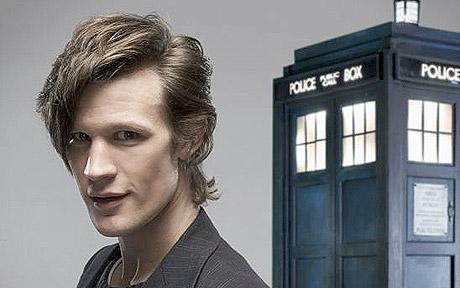
Matt Smith is the Doctor


This Saturday on both Space and BBCAmerica, the premier episode of the new season of Doctor Who will be shown. It is exciting for a number of reasons, first of all, there is a new producer. Russell T. Davies has stepped down. After bringing the Doctor back to television, he relinquishes control to Steven Moffat. The other change, and this is always a big one, there is a new Doctor. David Tennant has decided to step down from the role. To him all Who fans should give thanks, he has been a wonderful Doctor. If Christopher Eccleston is credited as bringing back the Doctor, in fact in past blogs I have called Eccleston one of the best Doctors of all time. In fact, the only thing that stops him from being the best is the fact he only had one season. If he could have stayed, well, if wishes were horses, right?

Still a word of thanks must go to David, he solidified the role and the show. If there were doubts at the re-launch, I would say those doubts are no longer around. I can't imagine anyone at the BBC saying: "you know, I think this whole Doctor Who was a bit of a mistake...". Such thinking does not exist.

Now we have a new Doctor and his name is Matt Smith. When I first saw him, I must admit, I was not at all sure, in fact my first thought was: "They've hired the lead singer of A Flock of Seagulls".


It's the hair.

However, he seems to brought youth and the vitality we expect from the Doctor. Let me say that I have seen the first episode. Don't look so shocked, have you never heard of the Internet??


You can continue to read, I will not include any spoilers. I don't want to spoiler your enjoyment of the episode.

I tried to think about his performance and I have to admit, he demonstrates a great deal of confidence and authority. When one considers he is the youngest actor to take the role, it is something. Also, he reminded me, in a way of the Third Doctor, Jon Pertwee. Jon brought a lot of 'James Bond' into the role, the Doctor became a man of action and as you can see from the trailer that pattern will be with this Doctor.

In fact there seems to be a youth movement with the new season. A new Doctor, a new companion. We have Karen Gillan as Amelia 'Amy' Pond. Much is being made of her rather sexy image. In fact one of the local newspapers in England report of her glamorous photoshoot. There has been some complaints about it, to them I say, have you never heard of Jo Grant, who was the companion of the already mentioned Third Doctor. In fact she was as much an action figure as the Doctor was, so don't lose much sleep over this portrayal. In fact I seem to recall reading the that companion was often female so as to bring Dad to the telly to watch with the kids.

I should say there's a few other Third Doctor references, but I will leave you to find them.

There is a new beginning to the show with a slight change to the theme song. Again, no spoilers so just watch.

Roger Chang spoke on a recent episode of the podcast "East Meets West", that it might take a few episodes to warm up to Matt Smith and I would agree. The show and the role is in good hands but it will take a bit of time to get used to Matt Smith, so don't discount him, just sit back and enjoy the ride.

Let me finish with the new trailer: