Wednesday, January 20, 2010


South of South Side Colborne


It seems the plans will go ahead. The article states thta money is now available to start tearing down the buildings. While many are looking forward to that moment there are some voices of concern regarding the entire exercise. I don't mean from groups who believe some of the structures are heritage structures and perhaps still may have a future use in downtown Brantford. There is a lot to be said for preservation and restoration, which I'm not going to get into. Although I will say some of the architecture is quite interesting. I do admit to not having any past or ideology regarding the downtown core, I just want to consider a few things that's all.

However and this has interests me, how it will take place. One of the local writers made some points. Tim Philips in a recent commentary mentioned his concern about the numbers which are being used to describe the costs of the project.
Now you have to demolish the buildings. While demolition is not rocket science, this site holds some particular challenges for engineers and contractors. At some places, the difference between Colborne Street and Warfe Street is more than 15 metres. The challenge is to keep Colborne Street from sliding down the hill into the parking garage.

This means that you cannot just bring in the bulldozers and start knocking down buildings. This is especially difficult as the tender calls for the complete removal of the foundations except, I believe, for the front wall if needed to stabilize the slope. Bear in mind, a similar issue of shoring up a structure existed at the water-treatment plant and the result was a building that tipped over and a bill for millions of dollars.


The distance between the two feet and by that I mean vertical feet, or metres is the challenge. As he states, its not a matter of getting the bulldozers out and start levelling, but to consider the fact that the ground slopes and it does that with different depths over the area.

With that in mind, I took my trusty cellphone and decided to take some photographs. Fortunately, it was a lovely afternoon:


There is some scale issues which need to be addressed. Still they were built that way and the topography hasn't changed since the first structure was built and from the dates on the buildings, they have passed the test of time. It seems the issue has to do with the overall collapse of the economic base of Brantford rather then anything which might have caused the dilapidation to this part of the street. Perhaps some are concerned with the potential structures to be built, more University buildings, a Community College, and a YMCA. All three have the potential of producing some large structural footprints and with the slope, then again the hope is the city will hire the right sort of engineers and contractors. People that are not just demolition experts but are aware of things such as soil and the effect of slope on demolition and building.

The costs so far are just under $7 Million for the purchase of all the properties. All of which must put the City of Brantford as the major tenant and landlord throughout the downtown core. The end, we all hope is that a revitalized downtown with buildings and people not only learning and working but living. I believe I have mentioned that what downtown Brantford lacks is the critical mass of people living downtown. If they achieve it, then the entire picture of the Core will change and the downtown will be reborn.

The plan is for everything to start in February and finish in June. I shall be there to record it all.

Tuesday, January 19, 2010


Crush It! A Review


Time for some disclosure. I don't drink wine, my knowledge of wine is very limited. I don't understand tasting at all. So, why am I reviewing a book by Gary Vaynerchuk who is better known for his very popular video podcast Wine Library TV. The answer is simple, because the book is not about wine tasting, drinking or anything to do with wine. What the book is about is Gary's philosophy of how to live your passion and make a career out of it. Just mentioning about his video blog, as he refers it, let's you know Gary is a man out there in web 2.0. His blog has got him interviewed on a number of mainstream shows, as well as internet shows. He took his career as a successful wine entrepreneur and brought it to the web, using the means of social media to expand his brand and also to demonstrate his enthusiasm for wine.

The book Crush It! is about his personal philosophy on how to live your life with passion as well as an instructional book on using the Internet and its tools to develop your own brand. I am going to assume the title is as much a play on wine making, crushing grapes, yes there's that much I know, as well as just getting out there and taking full advantage of life.

His philosophy can be summed up in three statements and he makes these early in the book
1) Love your family
2) Work very very hard and
3) Live your passion

I should say I listened to the audiobook, which I purchased through itunes, it is also available through Audible.com. The book is read by Gary and so you get to hear his passion for his philosophy and life, you also get his asides. He likes to break in to other thought not necessarily expressed in the book, which is part of the beauty. He presents the three points through personal experience and understanding how it worked in his life and how to transfer to your life. Ultimately, he wants us to enjoy life and to him its done through living your passion. He also is honest and reminds us to be true to our DNA. By this he means, not all of us can be Gary V, he states that if we're not comfortable making a video blog, perhaps a audio podcast is better, or maybe the written word is our strength, but stick with what we are.

Perhaps I'm jumping ahead here, what he tells us is to build our brand online. He tells us that the tools on the Internet makes this very possible and very inexpensive. If you wanted to start your own business based upon your passion and to Gary it is possible because if you are passionate about something, there's always someone who wantss to use that passion as a tie in to selling something. He states its important to build that brand and through the tools of social media it is possible. Twitter, Facebook and personal blogs with personalized addresses are just some of the tools that are inexpensive that will build that important web presence. He lays out the tools in a simple, straightforward manner that all of us can grasp and apply.

There are other great comments from Gary, such as Legacy is more valuable currency. It all goes back to passion and transparency. For the latter he shares about the time he appeared on Diggnation and some of the forum members thought he was very arrogant. He told that he spent time writing emails and comments of apology to those who were offended by his actions. This is apply that truth to his own life. He is living it and sharing that inspiration with us. He gives other advice, such as first knowing what your passion truly is and then shareing it with others. But again and again, he wants us to get out there and make it with our passion.

So the book, part discussion of the social media tools that exist today, part a book of inspiration. It is truly a fantastic book, in fact as I write this review I think of example and example he writes and more of his philosophy but I think I would rather you read, or listen to it and learn for yourself.

I understand it is a relatively thin book, only 160 pages or so. To listen will take a little over three hours, which makes it a good book to listen while working out at the gym or going for walks.

It is a book that will inspire you in so many ways. I want to conclude with the conclusion of another review, because he said it best:
“Crush It” is an excellent book offering personal stories that illustrate the importance of passion, patience, hustle and the value of doing what you need to do to be happy. Success takes hard work and this book does a great job of showing anyone the framework for making what really makes them passionate and turn it into an online business.


Available through Amazon, Chapter-Indigo and other fine booksellers.

One more thing, he's a big fan of the New York Jets, saying his plan is to purchase the team, that would not surprise me.

Saturday, January 16, 2010


Pedestrian Friendly Brantford


An article which caught my attention a few weeks back in the Brantford News. The headline spoke of the need to develop a pedestrian zone along the south side of Colborne Street, as part of the overall transformation of the area. This was from the city's 'walkability taskforce, which one person in the comments noted that committees seem to be one of the few growth industries in Brantford. We seem no end of task forces. Everything is centred along the southside of Colborne. At one time it seemed the idea of tearing it all down and building some brand new structures was a no brainer. One person I know suggested they get the 56th Field Artillery Regiment to bring a few howitzers out and enjoy some fun target practice. It could be a major fundraiser for the city or a number of local charities. Still I digress. Although it might be a lot of fun.

The issue of making a city 'pedestrian' friendly is now a concept which is gaining steam in a number of places. It's the idea of making a city, or a downtown more people rather then car friendly.

One article defines the concept this way:
Pedestrian-friendly streetscaping is the process of recreating
streets and sidewalks as the center of communal
life. At one time, streetscapes were where people
of all ages walked, biked, shopped, ate, played, and
met their neighbors. But today, streets with this kind of
activity are the exception rather than the rule. Towns
and cities are full of barriers that discourage walking or
bicycling as a means of transportation, recreation, commerce
or keeping fit and healthy. The occasional pedestrian
is often made to feel like an alien in a world
made only for cars.


As it stands, downtown Brantford is anything but pedestrian friendly. In fact there's not a whole lot of pedestrian traffic, unless it's near areas such as the University.


It seems to me what needs to be understand why people want to be some place. I think the three things people want to do are:
1) stroll
2) shop and
3) eat.

Any part of a city that allows people to do those things will be considered pedestrian friendly. I believe these three should be asked for anything planned for the downtown. Right now, there are some placess to stroll, such as the area around Harmony Square:


As for the other two, while there are a few restaurants and places to eat and or enjoy a few drinks, they are still not generating the critical mass required. As for shopping, unless you go to Crazy Bill's, hard to say, hard to say. In fact the downtown almost begs you to shop at the mall and to Brantford Commons.

Another article I read, gives this overview of the pedestrian friendly city:
If you go to the best neighborhoods and downtown areas, you’ll find pedestrian friendly streets. If you visit economically depressed downtowns or neighborhoods, you’ll often encounter environments that are hostile to the pedestrian. Pedestrian friendly streets help foster economic growth


The writer also gives this idea for the concept of what can be done:
.
Pedestrian friendly streets follow one simple rule—the pedestrian is the priority. These streets tend to share the following physical characteristics:
• Pedestrians are effectively separated from moving traffic. Separation is provided through the use of wide sidewalks, onstreet parking, and landscaping.
• Pedestrians can cross the street safely and easily. Intersections are designed to reduce pedestrian crossing distances,crosswalks are clearly marked and aligned with sidewalks, and pedestrian crosswalk signals are automatic not push button.
• The streets are full of life. Storefronts and buildings are continuous and contain many openings that create visual interest and activity. On-street parking is available to support healthy retail and is never replaced by bicycle or travel lanes, or landscaped medians. Well designed paving, street furniture and lighting make the street a place where people want to be.


This last point needs to be the priority, where people want to be, the downtown of Brantford can have a number of fun things which bring people to the downtown, such as the "Find your Spirit", the Jazz Festival and the upcoming Chili Cooking. Certainly all of these are fun and enjoyable and having Harmony Square as the Centre is important, but what can happen that brings people to the streets on a consistent basis and brings that sense of life and celebration that helps with the development of the downtown core.

Just a few thoughts for this day.

Tuesday, January 12, 2010


McGwire Admits Using Steriods!


Seriously. Does anyone believe his tearful confession and admission of steriod use?

As you know from reading the blog I am a big baseball fan. I love the game. I am a big fan of the Detroit Tigers. I think it is a truly wonderful sport, filled with history, statistics and wonderful memories.

This is not to say the sport is perfect, certainly if one goes through the history, it is a collection of the best and worst. From cheaters to heroes to colourful figures. There is the moment of the young boy going to "Shoeless" Joe Jackson and asking 'say it ain't so Joe', in light of the Black Sox Scandel.

But Baseball has always been able to spring back.

Now Baseball has finally concluded the era that has become known as the 'Steroid Era', a time when records fell as players decided to juice up with all sorts of interesting substances. All of this was done because practically everyone, including us fans, decided to look the other way.

Of course the big news is the admission of Mark McGwire that he took steriods during the period when he was the king of the long ball, breaking the coveted most home runs in one season record that was held, and let's be blunt, still held by Roger Maris. Mr. Maris did it honestly, by hitting the ball out of the park 61 times over the course of 162 games, which earned an asterik because Babe Ruth did 60 in 154 games. Now we fast forward to the 1990's when McGwire and Sammy Sosa put on an offensive display with the purpose of breaking one of baseball's hallowed and important records. As I recall, there was a lot of joy that night when McGwire put it over the left field fence. He embraced and was embraced by team mates and opponents alike. After he touched home plate, he went over to the Maris family and showed them his support.

Now we know the reality, that night was based upon a lie. He did it because he was maxed out on steroids. His chase for the record was based upon not natural ability but because he injected himself with performing enhancement drugs.

His name started to appear on lists and in a book written by his teammate Jose Canseco. A lot of people tended, at first not to believe, after all, Jose was a cheat. He injected, he was not loved, plus by the end of his career he was a bit of a buffoon. However, we understand this, Jose Canseco was absolutely right. Every word of it.

What is disturbing, is not the fact Mark McGwire took so long to confess, but the fact that so much of it was still based upon bafflegaff. I think the big lie that he's still trying to get us to believe is he really didn't need to take steroids. He did only to speed up the healing process. This is what he says:
During the mid-'90s, I went on the DL seven times and missed 228 games over five years. I experienced a lot of injuries, including a ribcage strain, a torn left heel muscle, a stress fracture of the left heel, and a torn right heel muscle. It was definitely a miserable bunch of years and I told myself that steroids could help me recover faster. I thought they would help me heal and prevent injuries, too."


The Sporting News, has this article about his tearful confession.

Should we believe him now? Should we believe that he could have done all those wonderful things and not needed the 'roids or the growth hormone. You know what, we don't and right now it doesn't matter. He did take it, he did hit all those home runs and because he denied it for so longs makes one to think that he knows he wouldn't have been able to hit as long, both distance and duration if it wasn't for what he used. The fact he took it and could make say such nice things to the memory of Roger Maris makes him even more dispicable. He chased the record with junk in his veins. The magic season is nothing more then smoke and mirrors, and now Mark McGwire has the nerve to think he can say a few nice words, cry a few tears and think all is good. It isn't.

The question is why now? Perhaps his new job as hitting coach for the St. Louis Cardinals has something to do with it. Does the fact he spoke now means there can be no more discussion or questions on the subject. Are we all now to simply think, well he admitted it, all is right in the universe, we can now love him and forgive him.

No we can't. I would suggest that each and every batter of the Cardinals be tested often and regularly for steriod use, after all, I'm sure McGwire will teach those young batters all he knows, including what is the best stuff to take.

Of course, not a lot of sports fans are buying this. We can see through an orchestrated confession done to say as little as possible and make the confessor a figure we should forgive and feel sorry for, well we don't. It was contrived, we know a script when we see one. As well, we should never forget the steroid era, we should remember what a joke it made of the game. Sadly this lesson is not being learned by the Commissioner. Bud Selig said, in a statement that was probably equally prepared beforehand stated:
The use of steroids and amphetamines amongst today’s players has greatly subsided and is virtually nonexistent, as our testing results have shown. The so-called steroid era — a reference that is resented by the many players who played in that era and never touched the substances — is clearly a thing of the past, and Mark’s admission today is another step in the right direction.


That's it, no more questions, keep moving, nothing more to see.

Forget it. We must never allow it to happen. We must never allow ourselves to be blinded and wink at the obvious. We must make sure those who cheated are chasticed and those who played clean be honoured.

I noticed Mark McGwire said this has nothing to do with the Hall of Fame, which means it has everything to do with the Hall of Fame. He should be allowed in, only when a special wing is established as the 'Roidheads Hall of Fame'. There are too many players who did it right, they don't need their legacy tainted, like it has already become.

Mark McGwire, a cheat.

The true home run king, Roger Maris.

Saturday, January 09, 2010


The Ham Sandwich


I was listening to one of the food podcasts provided through National Public Radio. The topic in question is what food became important or distinct during the first decade of the new century/millenium. The guest was Henry Balzer of the NPD Group, an organization that studies among other things, the food and eating habits of Americans.

When asked about what food became important, he stated it was yogurt:
Dr. BALZER: Well, if there is one that defines this decade it would have to be yogurt.

NORRIS: Yogurt?

Dr. BALZER: Yogurt would be the category or the food that has increased in our dietary habits more than any other food during the past 10 years.

NORRIS: Color me surprised.

Dr. BALZER: And it probably, if you think about your own behavior, I'll bet you start your day off a lot with yogurt or have it during lunchtime, or maybe have it as a dessert or a side dish or as a snack, more than you did probably 10 years ago.


This is interesting and as I thought about it, he's absolutely right, yogurt is now a part of everyday eating, it's quick and easy, either to throw in the lunch bag, box or pick up at the convenience store. The individual size makes it perfect for all meals and snacks.

What got me thinking about this blog is a statement he made near the end of the interview:
What won't change is what we eat. I will tell you the number one food that we will eat in the year 2020 will be a ham sandwich. And I know that because I've been doing this for 30 years and I was hard pressed in 1980 to be asked what we'll be eating in 1990. When I discovered that the ham sandwich was the number one thing we ate in 1980, and I made a prediction that we'd be eating it in 1990. And guess what we ate in 1990 - a ham sandwich. What do you think it was in 2000 - a ham sandwich. 2010? A ham sandwich.

So do I have to go out on a limb to tell you that the number one food we'll be eating in this country in the year 2020 will be a ham sandwich? What I don't know is what will be the bread. There will be something new about the ingredients or the condiments that go on this. But when I ask you, what did you have? You'll say, oh, I had a ham sandwich.


The one consistency of the last half century, and perhaps even longer is the Ham Sandwich. Again, I have to agree, what sandwich is easy to make, easier to consume and goes good with everything? The Ham Sandwich. When one considers our obsession with all things bad for us, such as fat and stuff, it's amazing it has lasted as long. Pork is either liked or hated and with the ham sandwich, it should be on the downward slide, yet it persists.

Perhaps because we simply like it. As I also said, it's the easiest sandwich to make, you take two pieces of bread, a few pieces of ham and cheese, add some butter, mustard, perhaps some lettuce and or tomato, stick them together, put it all in a sandwich bag and you have the basis of a good lunch.

There's also a certain ability to invent, for example, the type of ham can be varied, from cooked, to black forest, sugar and honey cured. Then there's mustard or the spread one can, to say nothing of the bread or mix the whole thing together with some mayo and make a ham salad sandwich or roll.

While doing my research, which included making a ham sandwich with leftover cooked ham, some cheese and a bagel, making sure the ham covers the hole, so not to have a cheesy mess all over the plate, I discovered a number of great recipes for ham sandwiches.

One declares the "Perfect Ham Sandwich", in fact it is a signature creation.

Another amazing sandwich is Croque Monsieur

.

There is also a feminine version called the Croque-Madame, which sounds equally nice, especially with a fried egg on top.


So cheers to the champion sandwich of all time, a survivor that marks decades as easy as we eat them.

Friday, January 08, 2010


The Nexus of the Universe


The reference is, of course to Seinfeld. Over the past couple of days, we have witnessed the launching of another cellphone by a previously non cellphone company. I am talking about the Google Phone, the Nexus One. When it was announced, the spokespeople at Google declared it to be not just a smartphone, but a superphone.

It has some interesting features:
3.7 inch touchscreen
1GHz snapdragon processor
5 Megapixel camera with LED flash
GPS and compass
Accelerometer
Noise cancellation technology
Voice recognition can be used with all applications
Light sensor changes screen brightness to conserve power
512MB Flash memory with SD card slot (expandable to 32GB)


There is also one more feature, and for this you need to visit the Google Nexus One site, because should you do so in Canada, you will be greeted with these words:
Sorry, the Nexus One Phone is not available in your country.


That is correct, the phone is going to roll out in the US, many parts of Europe as well as Hong Kong and Singapore. Again, no mention of Canada.

It is interesting to note one article mentioned that Android based phones are beginning to show up in a number of countries, none of them Canada. It seems we are now considered a technological backwater when it comes to telecommunication advancements. The nation that gave the world the telephone is now not considered on anyone's list of the newest products. Remember how long it took us to get the iPhone, I believe we got it before Turkey, but I'd have to look that up.

The reason for all this is, our well protected, well insulated cellular industry. The big three, Rogers, Bell and Telus treat us as complete dolts and believe we exist to serve them, not the other way around. Why put out money to improve networks, when it will mean possible expenses. You might recall a few months ago, they started to drop their 'service access fees', and then increased their monthly rates to compensate. Then again, there is a long history, it wasn't too many years ago that Bell Canada had a little surcharge on everyone's bill that was for the cost of digital phones. Indeed, they charged everyone for the privilege of having a digital phone, even though something like 99.99% of Canadians had a digital phone. I wonder if those six people with the Rotary phones still had to pay. Tell me that didn't bring in a whole lot of money for Bell.

All this was done to increase the value of the companies and make their ownership teams very wealthy. It is no wonder Canadians view cellphone companies in the same light as politicians and, politicians. It is also no wonder we are becoming a backwater. One statistic I saw suggested that cellular growth in Canada is slow, with only 60% of the population owning and using a cellphone.

Canada ranks last in cellphone penetration among developed countries.(6) In the final quarter of 2007, cellphone subscriptions averaged 99.7 per 100 inhabitants in the developed world, compared to 60.9 per 100 inhabitants in Canada, according to the Merrill Lynch Global Wireless Matrix. Of the 53 countries in the developed and developing world tracked by Merrill Lynch, Canada ranks 44th, just ahead of Peru, Pakistan and Indonesia and just behind Morocco, Brazil and the Philippines. However, many users outside North America have multiple cellphone accounts. Because the data does not correct for this, comparisons between mobile phone penetration in Canada and the rest of the world should be made with caution.


This is not good. It speaks of the fact Canadians have a strong hate on for these companies and would rather shut themselves out of the growing technology then give any money to these robbers. I suppose the amazing part of it, is that we are into digital when it comes to cellphones, instead of analog phones. Remember those yellow bricks?

However, with the fact the spectrum is now being opened up, one of the new providers are looking at the potential of bringing the Nexus to Canada.

They also are positioning themselves to use the new technology
WIND Mobile's third-generation network is based on the same basic technology as Canada's three incumbent carriers in Rogers Communications Inc., BCE Inc. and Telus Corp.

Yet its 3G devices run on a different frequency band called AWS (Advanced Wireless Services), also know in telecom circles as band 4. The Nexus One is designed to run on band 4, as well as bands 1 and 8.

The three bands make the Nexus One compatible with most operators around the world. But not all.

Unfortunately for Rogers, Bell and Telus, the three do not use band 4. Or 1 or 8. The three firms use bands 2 and 5 for their smartphones. The Nexus One can still theoretically work on their GSM-based networks, but the performance of the device would be degraded.

Read more: http://network.nationalpost.com/np/blogs/fpposted/archive/2010/01/07/why-wind-can-offer-google-s-nexus-one-and-others-can-t-a-3g-band-primer.aspx#ixzz0c52iNUR3
The Financial Post is now on Facebook. Join our fan community today.


Wind Mobile has made a few enemies because of its lack of the right number of Canadians sitting on the Board of Director.

TechCrunch, by the way, had a review of the Nexus One, you can read here.

The question is now, when do we get the Nexus One, then again, the question is, when will Canada cease to be a cellular backwater?

Stay tune

Thursday, January 07, 2010


Ipod Decade


I know I'm a few days late with this posting, but I've been thinking about the first decade of the new century, new millenium, however you want to describe it. When you think back there's been a lot of things happening; from 9-11, the War on Terrorism, Hurricane Katrina, the latest global recession and all that. So much to think about and write about. While all that could be considered important enough to mark a decade, I've thought about a few other things, trying to keep positive about it. After all, how do you deal with two wars and the expansion of terrorism. It's easy to point all sorts of fingers and while many have tried to make this a 'west' vs 'east', especially in content of radical Islam, it goes far deeper then that as the only reason.

There's was a fair discussion regarding the decade,just as was the case in the year 2000, was that the first year of the millenium, century, or the last year of the previous? I know those who keep count will say the thing doesn't begin until you see the number '1'. I got to agree, so as I write this it's the last year of the first decade, so I think I'm safe.

A few years ago I purchased the book The Cult of the Ipod. It was written about 5 years ago and give one person's look at the impact of this little music player. It's rather interesting to consider some of the statements made by the book. Leander Kahney does wax a bit eloquent when he writes:
The ipod is a bona fide hit- a genuine cultural phenomenum..The Ipod is changing the music industry- not just how it is played and enjoyed but how it is distributed and perhaps how it is made. The Ipod has usurped the album as the key product of the music industry, replacing it with the playlist...The Ipod has rescued and redefined Apple. The company may yet turn into a music company or one that sells all sorts of entertainment devises.


Steven Levy wrote a book and called it "The Perfect Thing", which sums up his feeling about the devise.

As disclosure is good for the soul, I have been an owner. I've owned the Mini, the Nano and now the IPod Touch. While not known as a MacSlappy, I would say it is one of my favourite electronic devises. I've gone from listening to music and podcasts, to viewing photographs to now, movies, televisions show, in High Def of course, audiobooks and games. Apple calls the Touch, the funniest Ipod ever and when one considers all that is possible, one would be hard pressed to call that some hyperbole.


It has been pointed out that the IPod was not the first MP3 player, but since its launch in Octobe 2001 it has defined the genre. In fact since its launch companies have tried to imitate it, not only in service but looks. It has become the gold standard of that is to do with portable music. Probably it could be said there are other devises that are at least comparable in looks and ability, perhaps even adding a few more features and certainly a lot cheaper or at least more at the same price, but it still holds true, there's something about the IPod.

As I read those comments I have to say, that even after 5 years, those words hold true. It has tranformed Apple, yes it still has computers and my understanding some very nice computers, but with the ipod and iPhone it has become the player on portable computing/communication devises. the iPhone has transformed the cellular phone industry as well, now everyone is attempting to build the "IPhone Killer". What it has, others must make a feature. Touchscreen? Better have it in an upcoming devise? Apps? Your app store better be growing, because all of a sudden people want apps on their smartphones and more then something to simply make notes and keep a list of contacts plus a calendar. The environment better be seamless as well so the people who own the devise don't have to go out and find content.

So has this devise defined the first decade, I would say it has. When it first came out, the white earbuds was the status symbol, you could look and see if a person had them and you knew they had an ipod, now if you see someonen with an mp3 player you naturally assume it's got to be an ipod, or touch or iphone. It just has to be.

The 2000's, the iPod Decade.

Tuesday, January 05, 2010


Memes!


I was listening to a podcast from NPR, in particular the episode talked about those wonderful things called "Internet Memes". The guest was Kenyatta Cheese of the excellent site "Know Your Meme". One that caught my interest was the one dealing with StarWars Kid. While it may be debated on what this was like, there was a fair bit of fallout from the posting of the video. While it inspired a lot of people to have fun with it, making things with it. The result of it was a lot of lawsuits.

Honestly, you look at it and realize its just some kid having a bit of fun with a video camera and pretending to be a character from StarWars. Like everyone who has done that since the release of the first movie. I realize this is the mid 21st century and obviously the parents wanted to protect their little boy from the humiliation of being made fun of by this thing called "Internet".

Let's move ahead a few years, perhaps instead of calling for lawyers, the parents should have called for a few agents. Give them the duty of turning this little bit of video into a money making opportunity. Get him a few minutes on Oprah, or Ellen. The money would have rolled in. Yeah, it's amazing how a few years would have turned something like a little embarrassment into a major source of tee shirts.

So parents of StarWars Kid, I hope you enjoyed the few dollars you made on the settlement, just meditate on the income you lost over the years.

Respect the Meme.

Thursday, December 31, 2009


Writing to wish everyone a safe, prosperous and blessed 2010. 2009 have been a blast, so let's have a great 2010.

Happy New Year

Wednesday, December 23, 2009


Copenhagen Final Accord


With all the fall-out and people either pointing fingers or patting themselves on the back, there was an actual document produced that is now the Copenhagen Accord.

I decided to give a link to it, so you can read it for yourself.

As you read it, you might notice that most of the language is directed towards the underdeveloped world, the part that is going to take it on the chin if carbon emissions continue to increase and the world continues to heat up.

While there is some nice words about keeping the temperature below 2C, it's just a lot of words. Well, in actual fact, there's not a whole lot of words, just a couple of paragraphs and only to say its something they want to aim for, without giving any guidelines on what to do.

what I like is the last two pages, I think everyone is supposed to fill in what they want to do, like an attendance sheet.

Then again, one climate scientist, James Hansen had hoped for a failure, not because he relishes the idea of a heated planet but rather:
would rather it not happen if people accept that as being the right track because it's a disaster track," said Hansen, who heads the Nasa Goddard Institute for Space Studies in New York.

"The whole approach is so fundamentally wrong that it is better to reassess the situation. If it is going to be the Kyoto-type thing then [people] will spend years trying to determine exactly what that means." He was speaking as progress towards a deal in Copenhagen received a boost today, with India revealing a target to curb its carbon emissions. All four of the major emitters – the US, China, EU and India – have now tabled offers on emissions, although the equally vexed issue of funding for developing nations to deal with global warming remains deadlocked.


His full interview in the Guardian is found here.

Let's hope for something better

Monday, December 21, 2009


South Side of Colborne


Time for some confession; I've lived only two years in Brantford and so I don't have the background to understand all that is happening on the south side of Colborne Street here in Brantford. From what I have heard it was a part of the downtown which suffered greatly when the economy of Brantford went down with the closing of the various farm machinery companies. I know that is probably a great exaggeration of what happened, but that's what I picked up. It seems at one point there was a horror movie shot in downtown Brantford, and nothing was necessary to give that run down, post-apocalyptic look to it. Says it all doesn't it.

A year or so ago, it was decided that the property on the south side was viewed as a problem and needed to be torn down. The city moved to expropriate the property and tear it down, with the purpose of building a larger campus for Laurier Brantford and the YMCA. Both are needed for the downtown and will be considered part of the renaissance of the downtown core. All this will need to the revitatization of the downtown core, which is desperately needed. As well, with the downtown core becoming based up higher education, it is important.

It would seem the city is of one voice and all agree it needs to be done. I remember one meeting I was at when the discussion was brought up and when the expropriation was brought up, there was unanimous support.

Or is there.


I brought up the topic in a past blog and I received a comment on twitter about what is going on. A link was given to me about a document that brings forward an alternative view of the south side of Colborne. A month ago the Brantford Heritage Committee produced a document which points to rehabilitation not just bulldozering the south side. The document is called:
"South Side of Colborne: A case for Rehabilitation". It is a fascinating document in that it gives the view that some of the property should be saved. The producers of the document point out that this is one of the largest stretches of
The longest stretch of pre-confederate buildings in the province of Ontario (if not anywhere west of Quebec)


This has inspired the group and people to reconsider this and say that there are buildings that should be saved and restored. They should be the anchor of any development which needs to take place.

The recommendation of the committee is:
While there are many buildings that have played a large part in the history of both Brantford and the country, we acknowledge that in order for the downtown to be revitalized some will likely need to be sacrificed. However, many of these are simply good buildings under tacky veneer, and some have fascinating and important histories.
The Heritage Committee recognizes that saving stand-alone buildings may not always be practical for a number of reasons. Considering that, the Heritage Committee advises that the City keep at least two blocks of buildings on the south side of Colborne Street, and elsewhere save good buildings where possible. This solution would provide plenty of room for complimentary contemporary uses, while still maintaining the uniquely historic character of the downtown core. It would also provide loft type
housing, a varied streetscape and small quirky spaces for individual entrepreneurs.


Certainly there is a lot of good with both sides, one side reminds us the south side is all that went wrong in the past with Brantford and to redevelop the City it will require some sacrifices and bring it to an end. The other sides says the South Side has property which is historically significant and needs to be preserved. These preserved and restored buildings can be part of the selling point since in many places older structures have a higher price and are viewed as viable property.

I have noticed lately in the papers there is now an interest and those who are not accepting the straightforward tear it all down philosophy.

It will be interesting to watch this all happen.

Saturday, December 19, 2009


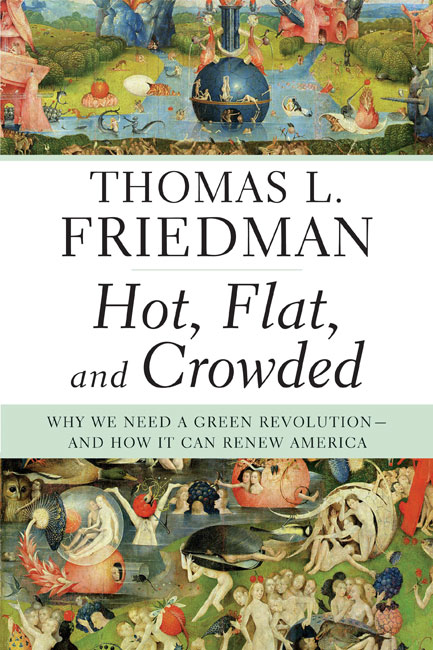
Hot, Flat and Crowded: a Review


While the debacle that is/was Copenhagen or COP(out)15 was going on, I decided to read the above book by noted author and columnist Thomas Friedman. He has written a number of books looking a such subjects as Globalization, to give an example. As a person who has studied and reported on OPEC and oil, it is only logical he should write a book about the environment and issue a call for the US to take the leadership in Green Technology.

His book is filled with accounts of personal encounters with some of the key players of the 20th century, as well as his travels to the various parts of the world. He also looks at the history of energy consumption and how governments, driven at times by need and at times by ideology has either benefited or dismantled energy policy in the States. He looked at the 70's, when the above OPEC was flexing its muscle and using its oil to 'punish' the West. The reaction by the US was to push for measures the encouraged both the increase of car milage and the use of alternative fuels, including nuclear. The result of these measures was the lowering of oil prices, not because of OPEC but because demand had decreased. This led to the Saudis to decide to use oil production for pricing only and not as a political weapon. Of course when oil prices went down, so did gas prices and suddenly the need to conserve disappeared and one saw the lowering of milage and the introduction of SUV's.

He considers two major reasons for getting involved in Clean Energy. The first has to do with oil. He asks the question why are we ( speaking as an Americans) sending money to countries that hate us? While we've heard the rhetoric over the past years since 9/11 to make the US less dependent on Middle East oil, it is more talk then action. He says we should do just that. He considers the Kingdom of Saudi Arabia and points out that the Kingdom has had a tendency to export its fundalmentalists to many parts of the Arab world. Due to its considerably large bank account, it changing the face of the Middle and cloning its very conservative view of Islam around that part of the world. Many a liberal Muslim country is feeling the effect of the Saudi's desire to export it's troublemakers. Let's be honest, the leadership of the Saudi nation should be dangling upside down from a Palm tree, but because of its wealth it's able to keep the people content.

Friedman considers what he calls the "First Law of Petropolitics":
If the resource curse describes the economic pitfalls that can come from resource riches, then what New York Times columnist Thomas Friedman calls the “first law of petropolitics” deals with is the potential political ramifications. Friedman applies the law to “petrolist states,” which he defines as “states that are both dependent on oil production for the bulk of their exports or gross domestic product and have weak institutions or outright authoritarian governments.” Examples of states that meet this criterion include Egypt, Iran, Nigeria, Russia, Saudi Arabia, Sudan, and Venezuela, among others.1

Friedman’s proposed law suggests that there is a negative correlation between the “price of oil and pace of freedom,” which “always move in opposite directions in oil-rich petrolist states.” In his framework, the “pace of freedom” means the development of the elements of a democratic government, such as free speech, free press, free and fair elections, an independent judiciary, independent political parties, and general rule of law.2


Its easy to not allow freedom of speech or even get along with others if oil is $70.00 a barrel, versus $20.00 a barrel. He considers President Chavez of Venesuala telling Tony Blair to 'go to hell', very easy when oil is the former rather then the latter. So high oil price is corrupting. It slows the natural progression of democracy because it gives corrupt government the means of quieting, or buying off dissention.

Another problem is the fact that the world wants to be like Americans, with all its wasteful glory. The world can't take 6 Billion Americans, it needs people who consume little and care for the planet.


He then talks about China and the incredible change that has been that country. How it went from backwater to a true economic giant. It's impact is everywhere, including its pollution, by the way. Mr. Friedman points out that 25% of the air pollution of Los Angeles can be traced to China. China is still in the Carbon Based economy and it has to grow and go at a great pace. It needs to because its growing populatioon demands growth.

Friedman talks about a talk he gave in China in which he told his listeners he hopes China stays with tne Carbon based energy model. He wants them to stay like that for another five years, so to give the US a chance to gain a headstart. Friendman believes the next energy source has to be clean energy and technology must be developed in the west, it is the only way to have China for breakfast rather then the other way around.

In the end he asks the US to be China for a day, by that he means making the great changes needed and not have to worry about lobbiests or other interference. He wants the US to have the mission of developing Clean Energy because such technology will pull the US out of the doldrums and lead to another Industrial Revolution which will have a positive impact on the planet.

While it is an American book, the lessons learned are just as necessary for Canada. We are a hybrid, a democracy with a lot of oil. While everybody points to the Evil of the Athabasca Oil Sands, we have to recognize it is here, but it should not be an excuse to stay the development of Clean Energy in Canada. We too can suffer the effects of Global Climate Change and we are equally unprepared for its coming.

I do recommend this book to anyone who wants to accept the challenge that the world doesn't have to stay the way it is. Go find it and read it for yourself.

Friday, December 18, 2009


COP15=EPIC FAIL?


The Headline in the Guardian screams "Copenhagen Ends in Failure"

Some corners, on the other hand see it as a breakthrough, because there is a new agreement which seems to take the place of Kyoto and is more of an easy sell to the Developed World. One headline lauded the deal as "meaningful".

I suppose it comes down to what a person's individual view is. The treaty encourages nations to work in a way so the temperature doesn't rise above 2C on average. This is a good thing, although many wanted 1.5C.

A reference in the Guardian gives this summation:
But it disappointed African and other vulnerable countries who had been holding out for far deeper emission cuts to hold the global temperature rise to 1.5C this century. As widely expected, all references to 1.5C in previous drafts were removed at the last minute, but more surprisingly, the earlier 2050 goal of reducing global CO2 emissions by 80% was also dropped.

The agreement also set up a forestry deal which is hoped would significantly reduce deforestation in return for cash. It lacked the kind of independent verification of emission reductions by developing countries that the US and others demanded.


So no real goals and what goals have been set in the past are now dropped. There is a vague reference to what is wanted, plus the sort of promise to have something in place next years. In other words, a huge waste of time.

By the way, it's not a treaty, because its not at all binding, it's an Accord, sort of a general statement of agreement that means we'll all sorta kinda work towards something, when its convenient. Oh and we'll throw a few bucks at the nations that are going to take climate change on the chin because, we would rather buy their silence then do something constructive.

Hey Developed World, how about use the money, double it and develop clean energy yourself. The same applies to you China! Then take the extra, give it to the developing world and help them develop their own clean energy- plus give aid and comfort to them because until we get our act together they are going to be the ones to suffer.

Wednesday, December 16, 2009


Blame Canada!


As one listens to the final days of the Copenhagen Conference on Climate Change, the picture emerging is one that can be considered disturbing. It appears that the majority of the carbon which is now in the atmosphere, causing all the environmental degradation is from one source and one source only, and that Source is Canada.

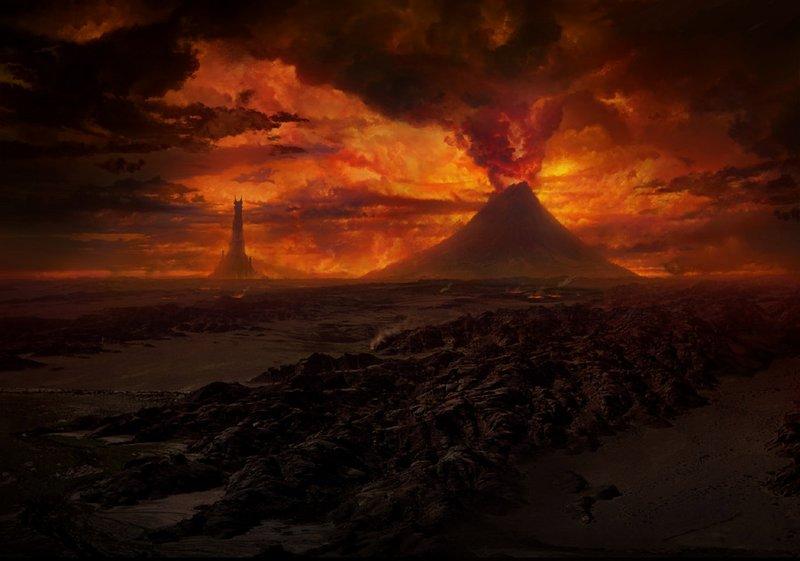
Well, come on you would think so by the way this fair Dominion is getting slammed by everybody with an agenda and a press badge. To give an example, Maude Barlow, the head of the Council of Canadians has declared the Athabasca Oil Sands as "Canada's Mordor".

Canada, it seems, is being reviled because of the development of the Oil Sands, which is being inspired by such nations as the USA, which wants a near-by source of oil that is owned and operated by a country which doesn't export terrorism, with the possible exception of hockey, and is friendly. As well, China seems to be in on the deal, providing the finances for future development.

It is safe to say that the Oil Sands are nasty. They are a major source of greenhouse gases as well as environmental degradation. A lot of places it becomes an open pit mine, so the forests are, obviously, destroyed with the loss of natural life as well.

From one article it appears the Oil Sands is one of the largest sources of greenhouse gases in the world, so if Canada wants to meet any sort of target, it has to look carefully at the CO2 emissions from the Oil Sands Project. It just has to.

It is because of this, Canada is taking it on the chin. There are protests against Canada in Copenhagen, for example, attacking us on the Oil Sands.

On top of it, Ontario and Quebec has called for strict standards. I found this article in the National Post, talking about the sanctimonious claptrap from the former "Have Provinces".
Never mind that when the Liberals were in power in Ottawa, the Liberal government of Ontario extracted a pledge from the feds not to include emissions from automakers in the national caps required to meet our Kyoto commitments, and to put a larger burden on energy-producing provinces such as Alberta and Saskatchewan. We don't recall Ontario and Quebec squawking about emissions "fairness" then.


Another article points out the Oil Sands produce 5% of Canada's CO2 emissions, most of what we produce comes from transportation, in comparison.

I suppose it is simple to say the Oil Sands are now the cause celebre of all that is wrong with the world. I would suspect that it is true, there are problems with the Oil Sands, basically because it's part of the entire Carbon based fuel economy which needs to come to an end. We have to stop our dependence on Carbon products to produce energy to run our global economy. It is now the 21st Century, we need to stop relying on energy that was developed in the 18th century.

So am I in favour of Oil Sands or what? The quick answer is 'no'.

What does annoy me is when people take pot shots at my fair Dominion.

Sunday, December 13, 2009


I want a Grande Hannukah Blend to Go


So my daughter, who is a barista at the Starbucks that is on the campus of Carlton University told the story of someone, let refer to him as a Ongeblussen, who berated her because while Starbucks does sell a Christmas Blend coffee, in both regular and decaf, there was no Hannukah Blend.

First of all, let's consider a few things:
1) how do we describe the Christmas blend? For the answer, we need to go to the website
Christmas is a time for family and friends to come together to eat, drink and be merry. And over the last 25 years, Starbucks® Christmas Blend has become a flavor of the season as much as turkey, stuffing and candy canes. It’s the unique blend of beans that makes this coffee such a fitting accompaniment for your holiday taste traditions. Our Christmas Blend is sweet and spicy, with a flavor derived from bright, sparkling Latin American coffees and smooth, full-bodied Asia/Pacific beans.


The second point is, a Hannukah blend coffee would only have a window of eight nights, certainly eight crazy nights, but eight nights still. So not a lot of lead time for a good selling coffee. Unlike Christmas which has a lead time of two months.

The third point, which is more theological, is how would you make the Hannukah Blend kosher- would the rabbi have to bless the whole shipment of beans as they arrive, after the beans are roasted. or would each bag have to be blessed? There are important questions and sadly I don't think there's an answer in the Law for this one. It may not have been one of the questions Moishe received the answer for when he entered the Tabernacle.

The fourth point is a bit more practical and this goes back to the person who raised it, no one really cares. Starbucks has decided to have a Christmas blend, probably because the predominant holiday of this time is Christmas. Thus they believe if they market stuff with the name "Christmas", it will go very good for them and after 25 years it's probably a good strategy. If this person wants to market a Hannukah blend coffee, then open your own coffee shop and make that part of your holiday gifts.

Finally, let me say something about my favourite blend, the Pikes Place Roast, a fantastic coffee, worth the price and worth the time it takes to drink.

Howard Schultz wrote this about the Blend:
“We named this coffee after our first store in Seattle's Pike Place Market because it truly represents the best of what we do: freshly roasted, freshly scooped, freshly ground, freshly brewed.”


It is truly delicious.

Saturday, December 12, 2009


Global Weirding


Finally, there is a phrase that describes what we're going through as far as climate change is all about. Let's be honest, no one can oppose something called 'global warming' can they? Especially the 'warming' part, we all like to be warm and cozy and very comfy. If things began to warm up, notice the use of 'warm', not become unbearably hot and miserable you get support.

However if you decide to say it's 'global weirding', then you have a picture of something out of control, or anarchy and of the old tried and true no longer being there. It means things are getting out of control and we had better do something. The site Double Tongue describes the phrase in this manner:
global weirding
n. an increase in severe or unusual environmental activity often attributed to global warming

I came across the phrase in the book "Hot, Flat and Crowded" by Thomas Friedman. In chapter with the same name, he gives the background to the phrase and what it is meaning in the present and perhaps the future. The problem again stems from too much CO2 in the atmosphere. We are at 387 ppm, some figure we can go as high as 450, which translates into a 2C change in temperature. That means there is some 'warming' but not enough to affect everything, just the people and places that really don't matter- ie the third world for example.

I should point out that one article states that Friedman is wrong to use the phrase since it gives the idea that it's almost one off. However a full study will lead one to realize that things are moving out of control, or at least there is that strong potential. It can mean hard storms when we don't expect it, or no storms when we hope for some rain or moisture of some sort. What it truly means is that:
hotter heat spells, longer and sharper droughts, more violent storms, and more intense flooding

will become the norm, thus the weird stage. The abnormal becomes sadly the normal and the end result of that is not very good for any life on the planet.

It is now half way through Copenhagen 15, the summit has been marked with bizarrely bad draft treaties, division between the haves and have nots and a protest march,which featured a lot of arrests. In other words, an almost normal summit.

The division between the developed nations and the undeveloped nations has to do with tolerance, and that comes to temperature. The developed want 2C increase, something which is completely reachable and doesn't truly affect the West much, after all, we've been pumping the stuff into the atmosphere for over 200 years, we can tolerate a bit more and get it to the upper limits, while nations such as Tuvalu are pushing for lower temperature increase:
Led by Tuvalu, negotiations at the UN climate summit in Copenhagen dramatically broke down today after developing countries split between those who favour a new protocol and others who want to continue with the legally binding Kyoto agreement.

The split appeared after several small island states and poor African states had demanded a legally binding treaty to aim at a maximum global warming of 1.5 degrees Celsius. They also wanted greenhouse gas concentrations stabilized at 350 parts per million (ppm) rather than the 450ppm favored by developed countries and some major developing nations.

The small islands states and their supporters claimed the existing agreement, the Kyoto Protocol, was not tough enough for the countries most vulnerable to the consequences of climate change. They wanted a new legally-binding protocol to run alongside the existing Kyoto Protocol.

They don't have a whole lot of high ground to go to, so if the temperature goes up too high and there's massive melt at Antarctica and Greenland, they and the Maldives suddenly have some issues, such as staying dry.

So what must we do, easy, get the CO2 levels down, don't accept anything that gives a licence to keep pumping the stuff into the atmosphere and don't allow any one group to tell us we got to keep things going. We can't. It's that simple.

Tuesday, December 08, 2009


Leaks!


It was one of those things when it comes to writing this blog; I had every intention of making comment on Naomi Klein's opening comments at Klimaforum09. Klimaforum09 is an alternative climate change forum for NGO's, protest movements and groups not associated with the status quo. Their purpose was to give a different way of looking at things. The preamble to their declaration stated:
There is a solution to climate change. What people and the planet need is a just and sustainable transition of our societies to a form that will deliver a more fertile planet and more fulfilling lives to future generations.

We, participating people and organisations at the Klimaforum09 in Copenhagen, call upon every concerned person, social movement, cultural, political, economic or other forms of organization to contribute to this necessary transition. It will not be an easy task. The climate challenge is indivisibly linked to other critical ecological problems as well as to complex social issues.


The tone adopted by Ms Klein was dismissive and devisive about COP15. She was even critical of Hopenhagen, which she dismissed as being corporate driven. She pointed out that a major sponsor was Coca-Cola, for example. She wanted unrest, such as happened in Seattle:
Down the road at the Bella Centre [where delegates are meeting] there is the worst case of disaster capitalism that we have ever witnessed. We know that what is being proposed in the Bella Centre doesn't even come close to the deal that is needed. We know the paltry emissions cuts that Obama has proposed; they're insulting. We're the ones who created this crisis... on the basic historical principle of polluters pays, we should pay


I was going to write, what's the matter Naomi, jealous that Hopenhagen has better schwag and tees then your summit has? I was going to say that climate change is bigger then any one group and whether she may like it or not, big business, multi-nationals have to be a part of the equation of the solution.

By the way I still do believe it, all sides must sit at the table as equals to discuss and bring about solutions that will bring down the levels of CO2 in the atmosphere and commence the cooling of the planet.
Then i read this headline:
Copenhagen climate summit in disarray after 'Danish text' leak

It seems a draft treaty for Copenhagen was leaked to the Guardian. The draft treaty, which was written ahead of the conference, because that the way these things operate, seems to be different then Kyoto in the idea of who should bear the brunt of it all. The document, which can be read here.

Developing nations are very angry over it since they are the ones to bear the responsibility for cutting carbon emissions. It's as if, should interpretations be correct that to sell it to the developed world, its being made not so bad. To quote the Guardian:
The document is also being interpreted by developing countries as setting unequal limits on per capita carbon emissions for developed and developing countries in 2050; meaning that people in rich countries would be permitted to emit nearly twice as much under the proposals.

In fact the numbers quoted for carbon emission is on the order of "Not allow poor countries to emit more than 1.44 tonnes of carbon per person by 2050, while allowing rich countries to emit 2.67 tonnes." I suppose the thinking goes along like this, geez it's not as if those poor people have anything that makes CO2 gas, I mean they just use wood for fuel, the walk everywhere and have barely subsistent agrilculture and work, so they don't need to use as much. I mean look at the West, we've got SUV and jets to travel around the world going to conferences such as this. We've got microwave ovens and home theatre, no one can expect us to GIVE that up. It would be cruel and inhumane.

If I can be a bit serious, the West has such a large carbon footprint that cutting back as dramatic still makes the reduced level at double the people in developing nations. Again, we've got SUV's, and they don't.

I wonder about a few things, is this one of those 'the ship of state is the only one the leaks from the top', is it a trial balloon and that the real document will seem so much better in comparison. Which is rather wrong, why not start with a decent draft rather then give a bad one so that the final crappy one will seem great in comparison.

Or

It could be a very concerned person who looked at the draft and realized it was so horrific it needed to be exposed to the light of day.

Will it mean Copenhagen is a failure? Or perhaps something good can happen, that the West now chasticed for trying to pull a fast one, will come to the table and really discuss the issue of global warming, climate change and reducing CO2 emissions.

By the way, one of the world's eminent scientist on global warming is hoping for a failure. He believes it the only way to save the planet.

Monday, December 07, 2009


Copenhagen, Climategate and the Meaning of Life


So they have gathered today in Copenhagen. Three thousand or so people from all the nations in the world have gathered at this lovely Danish City. The purpose is to bring about a clinate change treaty that will keep us from destroying our planet. By the way I went to the homepage and the site can house 15,000 delegates. That's a lot of officials, semi-officals, media hacks, flacks, bloggers, cranks, cynics, supporters, troublemakers, hangers on and all the sort that gather at these conferences.

This is not to say it's already a failure, in fact it has opened with a great deal of optimism. The welcome speech from the Danish Prime Minister declared:
The UN climate change conference opened Monday in an atmosphere of hope for a deal in Copenhagen within the next two weeks.

“A deal is within our reach,” the Danish Prime Minister Lars Løkke Rasmussen said in his opening speech, stressing that the talks will have to overcome deep distrust between rich and poor nations on how to share the burden of curbing emissions.

The presence of more than a hundred world leaders meant “an opportunity the world cannot afford to miss,” Lars Løkke Rasmussen said.


The purpose of all this is to deal with the issue of global warming and the levels of CO2 emissions that are viewed as the direct cause of climate change and global warming. This is articulated in the Committment Seciont of the UN Framework Commission on Climate Change:
Develop, periodically update, publish and make available to the Conference of
the Parties, in accordance with Article 12, national inventories of anthropogenic emissions by sources and removals by sinks of all greenhouse gases not controlled by the Montreal Protocol,using comparable methodologies to be agreed upon by the Conference of the Parties;
(b) Formulate, implement, publish and regularly update national and, where
appropriate, regional programmes containing measures to mitigate climate change by
addressing anthropogenic emissions by sources and removals by sinks of all greenhouse gases not controlled by the Montreal Protocol, and measures to facilitate adequate adaptation to climate change;
(c) Promote and cooperate in the development, application and diffusion,
including transfer, of technologies, practices and processes that control, reduce or prevent anthropogenic emissions of greenhouse gases not controlled by the Montreal Protocol in all relevant sectors, including the energy, transport, industry, agriculture, forestry and waste management sectors;
(d) Promote sustainable management, and promote and cooperate in the conservation
and enhancement, as appropriate, of sinks and reservoirs of all greenhouse gases not controlledby the Montreal Protocol, including biomass, forests and oceans as well as other terrestrial,coastal and marine ecosystems;

In other words, it is by the use and in particular the burning of fossil fuels that has increased the level of greenhouse gas in the atmosphere and thus raised the overall temperature of the planet. This is seen in the increase of storms, the moving north and south of deserts, of the disappearance of ice, in particular at the Arctic, where more open water is being observed and the fact it is getting later in year for it to ice over. There are shifts in migration of animals and the potential for flooding.

This led to the Kyoto Protocol which was the first great attempt to articulate and spell out exactly what the Convention meant in terms of decreasing CO2 emissions. The onus was to be paid by the developed world, since we were the ones pumping that stuff out. The developing world was to be basically left out, I know that is a gross simplification. Then again, we've been told how difficult it must be, so we reject the thought we can do anything about it.

Still, there are now websites, songs and videos calling for change:


This site in question deals with climate justice, which is defined as:
‘Climate Justice’ is urgently needed by today’s and tomorrow’s victims of climate change. Every year, hundreds of thousands of people in developing countries die because of climate change-related crises. Environmental disasters cost governments billions, so people suffer even more as economies are hit. Climate Justice is needed by those whose communities and economies are ruined by abnormal and increasing tropical storms, floods, droughts and crop failures. Climate Justice is needed by the world’s children, because it is they who will face greater catastrophes tomorrow if something isn't done soon.


Another group calls itself 350.org. The title comes from what is believed to be the upper limits of safe and acceptable CO2 presence in our atmosphere. That's parts per million, by the way. For most of history, the website declares, the level was at 276, now it's 387, which is in the unacceptable range. Listen the belief is not necessarily we'll wipe out human life along with everything else on the planet, it's just going to be very bad for a very long time unless we get our act together.

Join me at <a href=www.350.org" width="480" height="60" border="0" />


Copenhagen may represent an effort that will finally make a difference. What is needed is honesty and transparency by all members. I want to say, forget carbon credits, which is a mugs game, and say, let's honestly reduce CO2 emissions. I know there is concern that if we do get off the diet of fossil fuels it will end our comfortable lifestyles. But it might also foster new technologies and unleash new creative energies that will make a difference for the planet and for all members. Right now, the West has enjoyed the lions share when it comes to the benefits of carbon based lifestyle- the next lifestyle will need to include the underdeveloped and developing world.

I was going to say something about climategate, let's leave that for later.

Sunday, December 06, 2009


Twitter, the Word of the Year


Alright, as it is that time of year when people, places, things, news outlets, those that are into this sort of thing, announce the (blank) of the year. CNN, for example has the "Heros of the Year", Time Magazine has the "Person of the Year" and People Magazine has the "Sexiest Man/Woman of the Year". All these are something that people who want to write about this sort of thing.

At the end of November, the Global Language Monitor announced the most popular words of 2009 and I suppose to no ones surprise, although as I look at the other words, it can be considered a bit of a surprise, the top word is "Twitter". This organization monitors the use of the English language on the Internet, through news media, so it gains an understanding what words are popular. After all the carefull analysis, the people behind have decided to declare Twitter, the famous 140 character microblog as the word of the year, or the most popular.

I've been thinking about it and in one way, 2009 may be the year Twitter came to an age, I suppose. There seems to be one event, or a series of events that brings about and propels something to the front. One has to go back and consider that the First Gulf War was the event that brought CNN to the forefront. After that war, it became one of the most important sources of instanteous round the clock news. So with Twitter, I suppose it has to do with the events in Tehran, following the disputed Presidential Elections. By going on Twitter, one could follow what was happening. As the young people of Tehran protested, they Tweeted. They sent off messages about what was happening to them, what they were witnessing, all in 140 characters or less. I know some would argue the arrest of the dissident in Egypt may be the first real twitter event. As well, one of the eyewitnesses of the crash landing into the Hudson River of US Airways, posted his photographs on Twitter.

I was reading an article in The Huffington Post, regarding the announcement. One of the most interesting comments, and this might explain why Twitter has stayed around, perhaps not as popular as Facebook, but has maintained a presence is this:
Twitter has gone in the way of YouTube. At first, people thought YouTube was silly and weird; they didn't know how to YouTube and what a YouTube channel was. Now YouTube is synonymous, the industry standard, for online video -- for everyday people to watch, upload and share videos," Scott Goodstein, the text messaging expert who ran Obama's social networking presence during the campaign, told me. "Twitter is going through the same process. Twitter has become synonymous with quick, short opinion and perspective -- coming from anyone, going everywhere."


Which is true; Twitter has gone from the ubiquitous "I'm sitting in my beanbag chair, eating popcorn", to a source of news and information. After all, if I want to know what is happening, all I need to do is look at the popular topics on the front page. A lot of it might be driven by the day or popular culture, just consider how last week #TigerWoods was right up there, or at times you can see Lady Gaga, but every so often something comes along and makes it interesting to follow. Or one can put in a search and discover what others are saying about a topic of interest to you. For example, today I typed in "Climategate" and one of the responses was:
h8groupthink @cnni If ur not going 2 cover this scandal thoroughly ur aren't legit journalists http://tinyurl.com/y92eues #climategate science scandal


By the way, using that quote does not mean I adhere to the thought that Climate Change is not real.

Personally , I think I'm beginning to get Twitter. I didn't at first, I thought it was a waste of time and just another way to get more spam in my life. When I had my first account I signed up to 'get' more followers, big mistake. In fact may I suggest that you never do that, all you will get is people pushing their business plans. Like I said more spam in my life. There have been a few articles complaining about twitter spam. On the other side, one person asked the question, is it spam or good marketing? AS with all new topics, Twitter has unleashed onto us a plethora of books filled with everything from How To Twitter, to using twitter as a business and marketing tool.

Of course the irony of all these marketing books, is Twitter has yet to make money. It may be worth a lot, on paper, its value may be high, but is anyone getting a decent salary from it? Then again, perhaps the founders don't need the money. Who knows.

It has inspired a lot of people to create a lot of ways of connecting with, looking at, following twitter. Right now on my computer and on my Ipod Touch is TweekDeck, a stand alone twitter reader and poster that flashes up messages of those I follow. It's handy and makes it possible to follow, and occassionally post, while not having to stare at it all the time I'm on the computer. As well, as an app it's very handy. Of course there are a lot of apps that have to deal with twitter available on the iphone and iPod Touch.

As i have mentioned about photography, there's a number of ways of posting pictures to twitter. either directly or through agents such as Twitpic, Pikchur or Tweetphoto. There's a lot more.

This being the holiday season, I can't close anything about twitter without mentioning this, you can give the gift of a book containing your tweets. Yes, the company Tweetbookz will publish a book containing your tweets. You heard me right. It is the gift that will surprise and induce hours of joy as family and friends pour over your 140 characters. It is the gift that all will remember and probably question what sort of ridiculous shallow self-centred so and so you truly are. Would I get anyoone this gift, I'm not going to say. The concept has been reviewed, even by Wired.com.

So congratulations Twitter. May your failwhales be rare and your success grow.

Follow me on Twitter